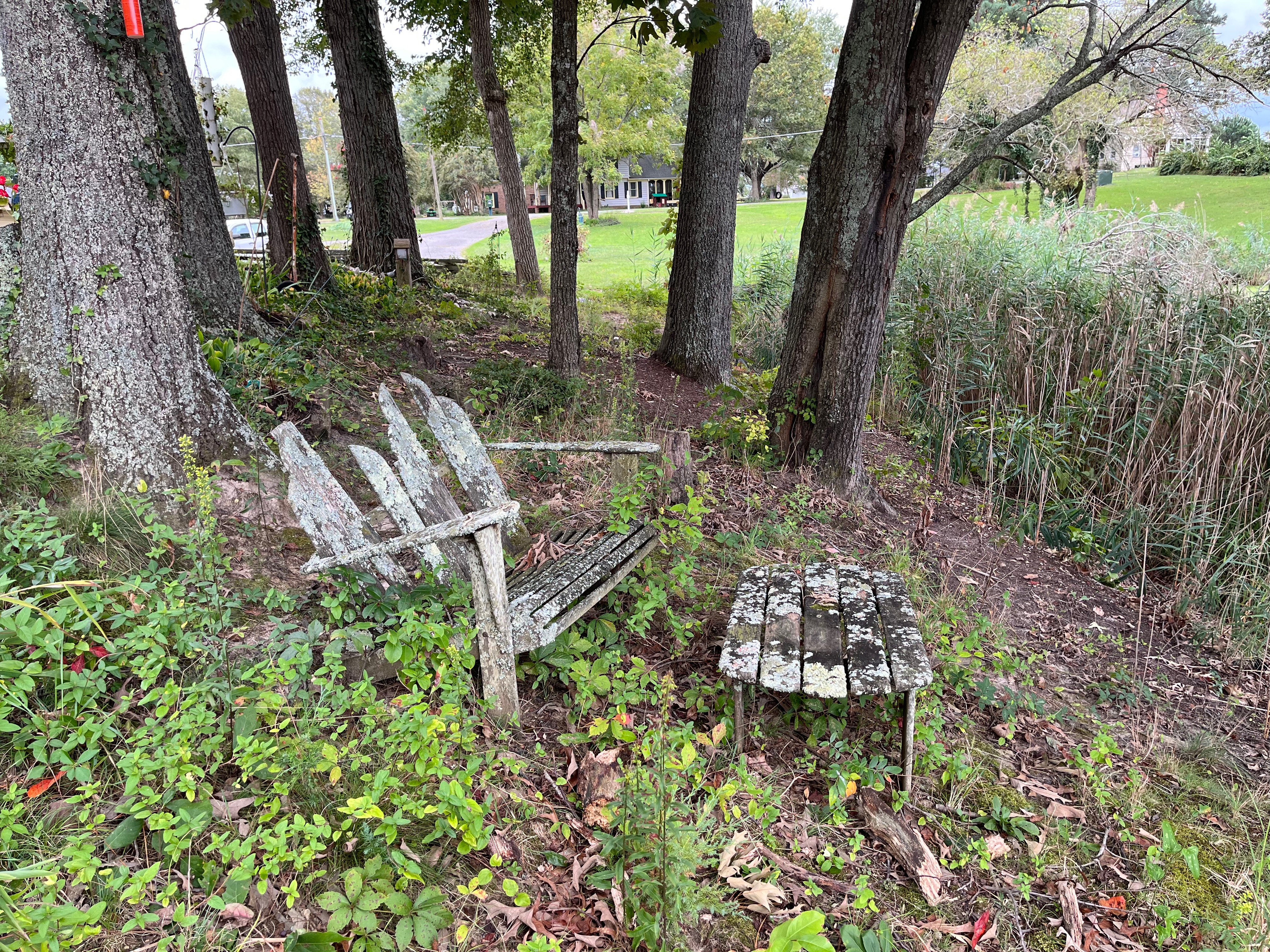
“So eat with joy that fills your heart, and drink with gladness too; for God has given his consent – approving what you do.” (Ecclesiastes 9:7)
This is the ninth post on Ecclesiastes, which I am translating into common meter. The following contains my rendering of Ecclesiastes 9, preceded by a brief reflection.
**********
Our Town, a play written in 1938 by Thornton Wilder, is considered by some to be the greatest American play ever written. Narrated by the Stage Manager and set in the fictional town of Grover’s Corners, New Hampshire, it explores aspects of everyday life from 1901 to 1913. Central to the play is the courtship and marriage of Emily Webb and George Gibbs. In the final act, we find that Emily has died giving birth to their second child, and see her at the cemetery in the company of those who have predeceased her. She learns that she can relive one day of her life, but is advised that it is not wise to do so. Emily is not deterred, and when she thinks about reliving a happy day, she is further warned, “No! At least, choose an unimportant day. Choose the least important day in your life. It will be important enough.” Ultimately, however, she decides to relive her 12th birthday, but of course as an unseen observer.
The scene shifts as she is transported to her chosen day, and she is initially overjoyed by every detail and person she sees. Soon, however, she realizes that no one is really living in the moment – they are not paying attention to the simple and precious things around them or even to one another. Emily’s silent words to her mother are, “Mama, just for a moment we’re happy. Let’s look at one another.” Eventually, it’s all too much for her to take and as she returns to the cemetery, her parting words are, “Good-by, Good-by, world. Good-by, Grover’s Corners…Mama and Papa. Good-by to clocks ticking…and Mama’s sunflowers. And food and coffee. And new-ironed dresses and hot baths…and sleeping and waking up. Oh, earth, you’re too wonderful for anybody to realize you.”
As the play ends, Emily asks the Stage Manager, “Do any human beings ever realize life while they live it…every, every minute?” His cryptic response is, “The saints and poets, maybe – they do some.”
“Saints and poets?” Interesting. Solomon, who many believe is the Teacher of Ecclesiastes, is revered as a Saint by the Eastern Orthodox Church, and is a poet of sorts, having penned Psalms 72 and 127, not to mention most of Proverbs. Whether he realized the value of life while he lived it, who knows? Certainly much of what he wrote presupposes living in the moment. We get some sense of this in Ecclesiastes 9:4-10. For example, “So eat with joy that fills your heart, and drink with gladness too; for God has given his consent – approving what you do.” (Ecclesiastes 9:7)
This is not about the self-indulgence of an epicurean, but the joy and gladness found in the simple blessings of God. At the heart of these verses is a call to be more fully present to the moment, to see God’s hand of provision, and to respond. In Our Town, we are moved by Emily’s post-death encounters with her town precisely because it is our town too. We, like the people in Our Town, more often than not take our life for granted. We rush through our day – eating without savoring, working without engaging, seeing without observing, and hearing without listening. We fret about the past and worry about the future, all the while missing the present moment. This should concern us because Christian spirituality is rooted firmly in the here and now – in being aware of God’s provision and responding in the moment and to the moment.
Total and complete immersion in the present is of course impossible to sustain even for the most spiritual among us. Life demands that we plan for our future and that we are mindful of our past. It is not a matter of always living in the moment, but of whether we are ever living in the moment. With practice we can become more aware of our material blessings – learning to savor and to respond with gratitude. And of utmost importance, learning to be more aware of and fully present to the people we encounter and to respond with love.
Solomon mentions this in verse 9, “Live gladly with the wife you’ve loved for all the days you’ve got; for this is your reward in life – your portion and your lot.” (Ecclesiastes 9:9) The greatest spiritual imperative is to love others. And foundational to loving others is to be fully present to them. Rather than seeing encounters with other people as interruptions, we see opportunities to love them by giving them our attention. Kathleen Singh writes, “The gift of our attention … is the most underused of human resources. That’s sad. It’s one of the most precious things we have to offer each other. There are many times that each of us has not been fully present with another, occupied with our own thoughts of our own perceived needs of our own manufactured agendas.” (The Grace in Aging, 226). This has been a hard lesson for me to learn. I had perfected a habit of listening with one ear, while my mind went about its merry way. I guess at some level I thought this was OK as long as I didn’t affirmatively disrespect the other person. Nothing could be further from the truth or the heart of God.
Living in the moment is the wisdom of the ages. But we are a reflective people – learning from the past. And we are a planning people – preparing for the future. And in both there is great wisdom. Still, we know that the Stage Manager speaks the truth that we seldom live in the moment. Ronald Rolheiser observes that, “We spend about 98 percent of our lives waiting for something else to happen to us. Only rarely do we find ourselves inside what Henri Nouwen called a ‘fully pregnant moment,’ that is, where we can say to ourselves: ‘Right now I don’t want to be in any other place, with any other people, or doing anything other than what I am doing right now!’ Mostly we are in one situation, with certain people, doing certain things, but are waiting for that to end so that something else or someone else can appear in our lives.” (Daybreaks, 3)
The depth of our spirituality is directly related to our ability to be present to the moment. Being attentive to the small things – savoring the morning coffee, studying the clouds, feeling the air on our cheeks, slowly chewing a meal, counting our blessings, and above all being fully present to someone we meet. Escaping the tyranny of time through gratitude to God will be enough.
S
**********
1 I found that deeds the righteous do,
are always in God’s hand;
But whether love or hate awaits,
no one can understand.
2 For good or bad, though clean or vile,
the same to all befall;
Though swearing oaths, though swearing not,
the same will come to all.
3 This evil comes to everyone,
it passes no one by;
There’s sin and madness in their hearts,
and afterwards they die.
***
4 But yet there’s hope for those alive –
remember what is said:
“A dog alive is better than,
a lion that is dead.”
5 For though the living know they’ll die,
the dead don’t know the same;
For them there is no more reward,
forgotten is their name.
6 Their love, their hate, their jealousy,
are finished now and done;
Forevermore they’ll have no part,
in things beneath the sun.
7 So eat with joy that fills your heart,
and drink with gladness too;
For God has given his consent –
approving what you do.
8 Adorn yourself with finest clothes,
and garments that are white;
Don’t let your head be lacking in,
the oil of delight.
9 Live gladly with the wife you’ve loved,
for all the days you’ve got;
For this is your reward in life –
your portion and your lot.
10 Exert your hands to what they find,
for there’s no work to do –
No thought, no wisdom in the grave,
where you are going to.
11 I’ve seen the swiftest lose the race,
the strongest lose the brawl;
The wisest starve, the smartest fail –
there’s time and chance in all.
12 For no one knows their time of death,
like birds caught in a snare;
So people trapped by evil times,
are taken unaware.
***
13 I’ve seen how wisdom once occurred,
here underneath the sun –
The following example that,
impressively was done.
14 O once there was a little town –
its population small;
A mighty king lay siege to it,
to break down every wall.
15 A poor but wise man in that town,
advised them with his brain;
He saved the town, but afterwards,
no one recalled his name.
16 I tell you wisdom beats out strength,
but sometimes it’s not heard –
When wisdom comes from one who’s poor,
unheeded goes each word.
17 It’s better hearing quiet words,
of someone who is wise;
Than heed a ruling prince of fools,
and what his shouts advise.
18 Now wisdom’s way is better than,
the weaponry of war;
But yet one sinner can destroy,
what’s good and so much more.
 Pursuit Of Virtue