Spiritual Practice – Living Grace

“A new command I give you: Love one another.  As I have loved you, so you must love one another.  By this everyone will know that you are my disciples, if you love one another.”

(Jesus)  (John 13:34-35)

*******

This is the fifth and final in a series of posts on empirical practices for re-formation of the soul.  I had originally planned to write about the role of suffering in spiritual growth.  But I quickly realized that I have not gone through deep, soul wrenching trials to write out of my personal experience.  But I will say that I believe suffering can be a stimulus to spiritual growth because the wisdom of the ages attests to how renewal can emerge from the caldron of despair.

So this final post includes a Summary of spiritual practice described in prior posts, and Biblical and human reasons for obeying the moral directives of Scripture.

*******

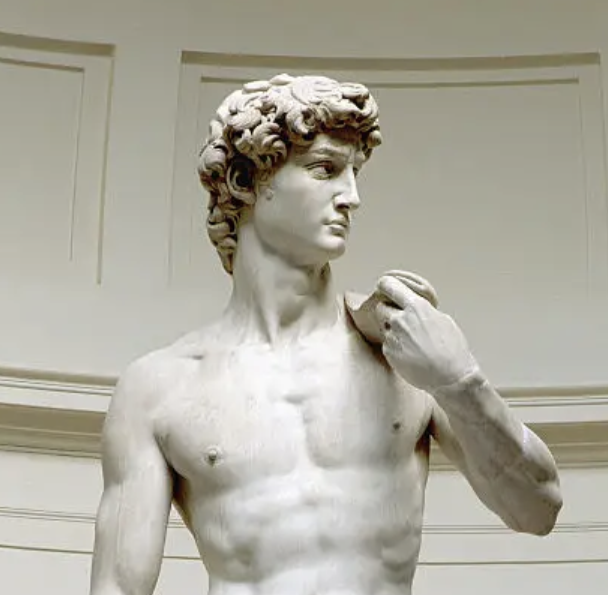
One of the most imposing marble statutes ever created is Michelangelo’s David.  Out of a massive piece of stone that two other sculptors found too flawed to work with, the maestro created his masterwork.  It is hard to imagine the creativity and skill required for such a project.  There is no room for error in sculpting stone because there is no going back if a piece has been inadvertently chipped away.  And so, Michelangelo first made a clay model that represented his vision for the completed work.  The model then guided his artistry as he methodically chiseled away for three years until “David” was revealed.  Afterwards, Michelangelo was reported to have said, “The sculpture is already complete within the marble block before I start my work.  It is already there; I just have to chisel away the superfluous material.”

This is a powerful image for spiritual formation insomuch as we have a completed self, a true self that is hidden by superfluous material waiting to be chiseled away.  The true self is that which was created in the image of God (Genesis 1:20), and which He crowned with glory and honor (Psalm 8:5).  The superfluous material waiting to be removed is our sinful habits that has encrusted and encased our true self, and which has become the darker aspects of our character.  We all have such material because we have all sinned and fallen short of the glory of God (Romans 2:23).

In some instances our sin is willful, but often it has developed from self-protective responses to the exigencies of life. Analogous to how an amorphous block of marble is formed from limestone when subject to intense heat and pressure, we humans have been formed by the pressures of life and the defenses we have created to protect ourselves.  These defenses have developed mindlessly and have metastasized into various habits.  They have become so automatic that we often are not even aware of how they stand in opposition to the teachings of Scripture.  Indeed, we may have never made a connection between our spiritual life and patterns in our lives such as repeated arguments, anger at those with opposing views, critical judgments of others, or simply an inchoate unease about our lives.  We may sense something is not right, but we can’t quite put our finger on it.

The longer we live mindlessly, allowing events to form our character, the thicker are the layers of sin obscuring what God desires for us.  For example, in the current political environment tribalism is rampant with its concomitant critical judgments, anger, and name calling.  It all seems perfectly normal because we see our aversion as being “righteous.”  In this way we justify ourselves in ignoring Jesus’ most explicit teachings against such feelings and actions.  It seems that many Christians are mindlessly swept along as if helpless before a tsunami of hatred.  Overcoming entrenched anger is not easy, but if one truly believes that the commands of Jesus supersede cultural norms, it is possible.  It must be possible!

The key for those who are looking for a better life and deeper walk with Jesus is to stop looking out, and start looking in. There is no security in what happens outside of us – we cannot protect ourselves from world events, actions of others, and suffering and loss because time and chance happens to all (Ecclesiastes 9:11).  Looking inward we find a far more reliable sanctuary for our soul.  For although outwardly we are wasting away, yet inwardly we are being renewed day by day (2 Corinthians 4:16).  This journey inward involves removing those layers of sinful habits that cover our true self.

The process by which these layers are removed is known as spiritual formation.  This has been a hot topic in many churches over the past several decades, although it has been alive and well throughout the past two millennia.  We have a pretty good idea of what the true self looks like because, like Michaelangelo, we too have a model, which is Christ.  The Apostle Paul describes the process as being “conformed to the image of His son.” (Romans 8:29).  The question is how to do this?

Summary of Spiritual Practice

The answer is to practice the moral directives of Scripture, particularly those of Jesus and the Apostles.  That’s it!

The practice of any one of these is known as a moral discipline.  There are literally scores of directives in the Bible to choose from.  Jesus tells us to love, forgive, not worry, and others.  Many of the Apostles flesh these out in more detail.  Paul defines “love” as patience, kindness, etc.  He also writes about the fruit of the Spirit – love, joy peace, etc.

This approach is distinctly empirical and spiritual, as opposed to analytic and theological.  In other words, learning and growth comes through intentional practice, rather than perfunctory assent to the commands.  We are attempting to break sinful habits such as defensiveness, and to create righteous ones such as thankfulness.  The practice requires us to engage our mind and to think deeply about what we are about.  Traditional spiritual disciplines such as meditation and prayer are also essential.  But literally the heart of the matter comes through practice.  How else could it be?

This in no way negates the grace of God acting thorough the Holy Spirit to strengthen us in our quest to grow spiritually. However, this does not release us from following His commands to the best of our abilities.  As Dallas Willard reminds us – grace is not opposed to effort, it is opposed to earning.

In brief, the practice is to attempt to follow a Biblical directive for some preselected period of time, perhaps a week or so.  As much as possible we think about the directive throughout the day and attempt to embody it in everyday activities.  Whenever encountering another person or situation we consider how to practice it during that moment.  It may be helpful to journal experiences: successes, failures, or simply revelations.

Even following a single directive for one day can have an impact.  I remember a piece from Cathine Marshall’s prayer journal entitled “A Fasting on Criticalness.”  She describes how by fasting from critical thoughts and words for a single day, the extent of her critical nature was revealed and how it had crippled her creativity – in prayer, in relationships, and writing.

Following a single directive for a longer period can have a wider impact.  Kathleen Singh writes, “One couple found that they tended to judge others in the casual conversations they had between themselves.  They made a commitment to stop.  They found that the adoption of just this one practice of abstaining from judging others allowed them entry into examining their behavior, and transforming their behavior, in the light of all of the other aspects of practicing moral discipline.”

Following multiple directives on a rotating basis can broaden the impact even more.  Like turning a multifaceted diamond to see different aspects of the gem, multiple directives can be surprisingly revealing of our condition.  This practice is to select several virtues to embody and/or vices to reject.  Examples of virtues abound.  The Apostle Paul mentions eight in the following: “clothe yourselves in compassion, kindness, humility, gentleness and patience.  Bear with each other and forgive one another if any of you has a grievance against someone.  Forgive as the Lord forgave you.  And over all these virtues put on love, which binds them all together in perfect unity.  (Colossians 3:12-14)  My personal practice for the past three years has been to rotate through the nine fruit of the Spirit (Galatians 5:22-23) – one a week and then repeat.  Regarding vices to reject, Jesus mentions anger (in all its forms), worry, lust, and hypocrisy.  Paul says we must put off anger, rage, malice, slander, filthy language, and lying (Ephesians 3:8-9)  And 1 Corinthians 13:4-7 describes “love” in terms of both virtues to embrace and vices to reject.

The practice and goal are the same – practicing a way of life through focus and effort until that way becomes automatic. Although a single week is hardly enough time to change a lifetime habit, it is start.  If nothing else, it can highlight areas of strength and weakness of character.  It will also demonstrate the challenge of finding and staying on the narrow path. As well, if done within a group setting, there may be ancillary, though not less important benefits such as mutual support and sharing that can come as people become more open and vulnerable in discussing challenges, successes, and failures.

In addition to practicing the fruit of the Spirit for the past three years, here a few other Scriptural directives that I have practiced and found helpful.  I include a few ideas with each one to stimulate your thoughts.

1) Complaining
“Do everything without grumbling or arguing.” (Philippians 2:14)

  • This is an excellent “entry level” spiritual practice to start with.
  • No one likes to live with someone who is always complaining about one thing or the other.
  • For the next week don’t complain about anything – not the weather, traffic, a broken appliance, the neighbor’s dog, nothing! You get the idea.

2) Thankfulness
“Give thanks in all circumstances.” (1 Thessalonians 5:18)

  • In many ways this is the flip side of not complaining.
  • Make a list of things you are grateful for.
  • Practice saying “thank you” to everyone who helps you or serves you.

3) Words
“Death and life are in the power of the tongue, and those who love it will eat its fruits.” (Proverbs 18:21)

  • Consider your words and speak only when it is essential.
  • Practice simply asking questions of others without agenda. In other words, be curious about their lives.

4) Death
“Someone who is always thinking about happiness is a fool. A wise person thinks about death.” (Proverbs 7:4)

  • Meditate on your death.
  • Imagine what, if anything, you would regret if you had just a few days left to live.
  • Take a walk in a cemetery.

5) Presence
My dear brothers and sisters, take note of this: Everyone should be quick to listen” (James 1:19)

  • Practice listening to others without jumping in with your better ideas.

6) Worrying
Therefore I tell you, do not worry about your life, what you will eat or drink; or about your body, what you will wear.  Is not life more than food, and the body more than clothes? (Matthew 6:25)

  • Think about what you worried about a year ago, last week, yesterday – and how many you can recall.
  • Meditate on the nature of worrying.

7) Patience
“Love is patient” (1 Corinthians 13:4)

  • Pay attention to what situations make you impatient.
  • Meditate on whether your impatience is rooted in pride.
  • Practice controlling your words, bodily movements, and thoughts in all things.

8) Defensiveness
“If it is possible, as far as it depends on you, live at peace with everyone.” (Romans 12:18)

  • Do not respond defensively when challenged or confronted.
  • Do not hold a grudge.
  • Forgive.

9) Thoughts
“Do not conform to the pattern of this world, but be transformed by the renewing of your mind.  Then you will be able to test and approve what God’s will is – his good, pleasing and perfect will.” (Romans 12:2)

  • Think about what you are thinking about this week.
  • Meditate on the purpose of God’s will.

10) Judging
“Do not judge, or you too will be judged.” (Matthew 7:1)

  • Fast from all criticism for a week.

There is no need to practice every moral discipline in Scripture because very quickly they merge into one another.  For example, patience, peace, and gentleness are all connected; as are anger, defensiveness, and unforgiveness.  Practicing one naturally leads to practicing the others.  This is hardly surprising because all moral disciplines are designed to conform our hearts to God’s will – the twin stars of love and humility.

Biblical and Human Reasons for Obeying the Moral Directives of Scripture

The idea that we are obliged as Christians to live a certain kind of life is often looked upon skeptically by many in the church.  There is a fear that focusing on obedience to moral directives is promoting “works righteousness,” which goes against the assurance that we are saved by faith.  At the risk of heresy, I believe there are at many reasons to be skeptical of such skepticism.  For salvation notwithstanding, the reasons for obedience stand more or less on their own. Nonetheless, for those who find heresy lurking in this, I will simply say that I am grateful they no longer burn heretics at the stake, but only get angry with them and call them fools.

1)  Number of Moral Directives – over and over, we are commanded to live a certain kind of life – a life permeated by love and humility.  Consider the following:

  • Do not merely listen to the word, and so deceive yourselves. Do what it says.” (James 1:22)
  • “Whoever claims to love God yet hates a brother or sister is a liar. For whoever does not love their brother and sister, whom they have seen, cannot love God, whom they have not seen.” (1 John 4:20)
  • “If you love me, keep my commands.” (John 14:15)
  • “Whoever wants to be my disciple must deny themselves and take up their cross daily and follow me. For whoever wants to save their life will lose it, but whoever loses their life for me will save it.” (Luke 9:23-24)
  • “Do nothing out of selfish ambition or vain conceit. Rather, in humility value others above yourselves.” (Philippians 2:3)

Perhaps one of the most succinct directives is found in the Old Testament.

  • He has shown you, O mortal, what is good. And what does the Lord require of you? To act justly and to love mercy and to walk humbly with your God. (Micah 6:8)

2) Richer Life – the moral directives of Scripture help us to live a richer life today.  Jesus says,

  • “I have come that they may have life, and have it to the full.” (John 10:10); and
  • “Everyone who hears these words of mine and puts them into practice is like a wise man who built his house on the rock.” (Matthew 7:24)

This is life today!  More than half of the words of Jesus recorded in Matthew relate to virtue and the life we live here on earth.  Although there are no guarantees, we still find throughout the Bible promises of a better life when we live according to God’s word.  For example:

  • “God holds success in store for the upright, he is a shield to those whose walk is blameless” (Proverbs 2:7).

3) Mystery – we need always to be mindful of the core tenet of Protestant theology, namely, “grace alone, thorough faith alone, in Christ alone.”  But we also need to be open to the mystery of the complete Biblical story.  As Peter Scazzero writes in “Emotionally Healthy Spirituality,” “Job’s friends had no room for the ‘confusing in-between,’ no room for mystery.  Like many Christians today they overestimated their grasp of truth.”  The history of the Evangelical church includes disagreements and splits over theology, personalities, and morality, with everyone believing that are on the “high road.”  These differences are not unimportant but surely we must see that the only way we are connected is by humbly accepting the mystery inherent in different points of view – including the relationship of faith and meritorious living.

4) Choices – Ironically, we Christians get to choose to obey or ignore God’s word just like Adam and Eve in the Garden of Eden.  God gave a very precise command –

  • “Do not eat from the tree of the knowledge of good and evil.” (Genesis 2:17)

In disobeying God’s command, they paid a very dear price.  There was nothing inherently wrong with eating from tree except that God forbade it.  And from this one act, a foundational tenet of our faith – original sin – was born.  And yet, like Adam and Eve, we often feel that we can ignore God’s commands with impunity.

5)  Our Heart – consistency between our hearts and actions – is the most important thing to God.  We are warned against evil in our hearts.

  • “Woe to you, teachers of the law and Pharisees, you hypocrites! You clean the outside of the cup and dish, but inside they are full of greed and self-indulgence.” (Matthew 23:25)
  • “These people honor me with their lips, but their hearts are far from me. They worship me in vain; their teachings are merely human rules.” (Matthew 15:8-9)
  • “The Lord does not look at the things people look at. People look at the outward appearance, but the Lord looks at the heart.” (1 Samuel 16:7)

Breaking old habits and creating new ones in line with Biblical directives so that we automatically act out of what is in our heart is the essence of spiritual formation.

6) Everyday Life – from a strictly human perspective, who would you rather live next door to – a Christian who is angry, mean spirited and belligerent, or an agnostic who is friendly, loving and peaceful?  Should not our aim as Christians be to act like the latter and not the former?  Again, not as a matter of salvation, but as a matter of our common humanity.

7) Bookends of Jesus’ Teaching – the first and last words of Jesus’ ministry recorded in Matthew speak to obeying His commands.

  • The first: Repent, for the kingdom of heaven has come near.” (Matthew 4:17)

Repent” means to turn from what God forbids and to what He commands.

  • The last: Go and make disciples of all nations, baptizing them in the name of the Father and of the Son and of the Holy Spirit, and teaching them to obey everything I have commanded you.” (Matthew 28:19-20)

Nothing could be clearer – the directive of the Great Commission is to make disciples by teaching obedience to Jesus’ commands.

8) Witness – Finally, our greatest witness for Jesus is not what we say about our faith but about how we live it out.  Or in the words of Jesus – the quality of our love for one another.

  • By this everyone will know that you are my disciples, if you love one another.” (John 13:35)

Endnote

I entitled this final post “Living Grace,” which can be read in two different ways.

“Living” can be a verb indicating that it is something that we are to do, something that we are to live out.  Read this way, the question we ask is whether we are living out the grace of God’s commands in our life or ignoring them?

“Living” can also be an adjective, indicating that the grace of God that enables our formation is living as opposed to dead.  Read this way, the question we ask is whether grace in our life is alive or dead?

S

Spiritual Practice – Putting Off Vices

“Put off your old self, which is being corrupted by its deceitful desires.”
(Ephesians 4:22)

The moral project for a Christian is to die to the old self and rise to new life in Christ.”
(Rebecca DeYoung)

*******

This is the third in a series of posts on empirical practices for re-formation of the soul.  These include: (1) Putting on virtues of the new self; (2) Putting off vices of the old self; (3) Renewing the mind; and (4) Growing through suffering.

In this post – Putting off vices of the old self.

*******

It is undeniable that here at the start of 2025 we are experiencing perhaps the most disruptive and divisive political climate in a generation.  For those who oppose the changes being made by the current administration, there is anxiety, fear and above all else anger.  There is anger obviously at the chief executive leading the charge, anger at those in the legislative branch who are seen as enablers, and anger at those voters who support the chaos.  There is anger at the callousness of many of the actions; anger at the rhetoric; anger at the deluge of misinformation; and anger at what is seen as an attack on the pillars of our democracy.  The list goes on and on.

For those who support the changes there is anger at the judiciary, anger at journalists, anger at immigrants, and anger at anyone who speaks out in opposition.  In some cases the anger rises to threats, intimidation, and even violence.  Some may remember Barry Goldwater, former U.S. Senator and Republican candidate in 1964 for the Presidency.  Goldwater was an enigmatic figure who in many ways paved the way for the restructuring of the modern Republican party.  In his acceptance speech at the nomination convention, he delivered the memorable line, “Extremism in the defense of liberty is no vice.  And moderation in the pursuit of justice is no virtue.”  This could be a slogan for either side in the current chaos.

I have been pondering all of this in light of the Apostle Paul’s admonition to, “Put off your old self, which is being corrupted by its deceitful desires.” (Ephesians 4:22)  And specifically his direction to, “Get rid of all bitterness, rage, and anger.”  (Ephesians 4:31)  We find this very hard to do in the current environment notwithstanding the exacting words of Jesus, I tell you that anyone who is angry with his brother will be subject to judgment.  Again, anyone who says to his brother, ‘Raca,’ is answerable to the Sanhedrin.  But anyone who says, ‘You fool!’ will be in danger of the fire of hell.”(Matthew 5:22)  Can you imagine what Jesus or Paul would say about the reaction that many of us have to the current political machinations?

Arguably there is no more destructive emotion and action than the vice of anger.  Dallas Willard writes, “Anger and contempt are the twin scourges of the earth.  … these bitter emotions form the poisonous brew in which human existence stands suspended.  Few people ever get free of them in this life, and for most of us even old age does not bring relief.” (The Divine Conspiracy)  For these reasons, I am focusing this post of Putting Off Vices primarily on the vice of anger.  But with the understanding that these practices can help overcome other vices as well.

But first, a few comments about vices; and then some practices for putting off vices.

About Vices

A dictionary definition of “vice” is “immoral or wicked behavior.”  This is okay as far as it goes, but Biblically a vice is more than just behavior or actions, but also include thoughts that are bad or wrong.  For example, when comparing anger to murder, Jesus tells us that the thought is essentially the same as the deed.  We Christians are more familiar with the word “sin,” which covers actions and thoughts proscribed in the Bible.  Although there are some differences between vice and sin, they are often conflated and treated as roughly equivalent.

In the Gospels, Jesus commands his followers to abandon vices such as:  anger, revenge, adultery, retaliation, vanity, worrying, critical judgments, unforgiveness, pride, hurtful words, and others.  In fact, by my count, he spoke more about vices than virtues.  The Apostle Paul insists that we put off the old self, which he describes by vices such as: deceitfulness, lying, stealing, unwholesome talk, bitterness, rage, anger, brawling, slander, and malice.  (see Ephesians 4:22, 25-31) There are of course many other passages with similar import, such as, Colossians 3:5-9 and Galatians 5:19-21.

Classical Christian thought has organized vices into seven categories, commonly referred to as the Seven Deadly Sins. These are Vanity, Envy, Sloth, Greed, Wrath, Gluttony, and Lust, all deriving from the root sin of Pride.  Most of the vices named in the Bible can be classified under at least one of these seven.  For example, Wrath covers anger, defensiveness, hate, frustration, animosity, judgment, rage, and the like.

Vices, like virtues, are not something we are born with.  Rather, they develop over time in response to how we interact with our environment – often as a coping or defense mechanism.  I have mentioned in the past how one interaction with my father when I was around six years old led me to believe that I had to be perfect in order to be loved and not rejected.  From this event (and no doubt others) I gradually became more and more defensive towards anyone who questioned my competence or beliefs.  Without ever consciously thinking about it, defensiveness gradually became part of my character.  N.T. Wright describes the process thus, “Anybody can learn a vice – all you have to do is to go into neutral, slide along the way life is going and before long the habits of life will have you in their grip or vice.” (After You Believe)

The target for putting off vices, like that for putting on virtues, is the automatic responses that reside in our subconscious mind, otherwise known as our heart.  The goal is to make our automatic response Christlike, which means that patterns of non-Biblical behavior need to be changed.  In this sense, the practice of putting off vices is similar to putting on virtues.  However, in my experience, putting off a vice requires a more targeted approach than putting on virtues.  The practice I suggested in a post last month, “Putting On Virtues,” was to continuously cycle through a list of virtues.  The practice I suggest here for putting off vices is to target a specific vice.  In both the putting off and putting on, transformation occurs through our practice and the grace of God.

So how can a vice be put off?  How can anger (or any vice) be overcome?

I write this with the same caveat as the other posts in this series on Spiritual Practice – that there are many paths forward, many ways to cross the river.  I share from my experience that it may stir your own thinking on the matter.  And thinking is critical because transformation comes by the renewal of the mind, and vices (like virtues) must be carefully thought through.

Practices for Putting Off Vices

Awareness

How aware are you of your vices?  It’s a simple question with not a simple answer.  While some may be aware of one or more of their vices – lust, anger, envy, or other – many of us remain oblivious.  Or even worse, we don’t think we have any vices, which in many ways explains the state of our hearts, not to mention our country and world.

I was surprised to discover how difficult it is to become aware of one’s own vices (even though it is easy to see them in others).  For one thing, they reside in the subconscious mind, which is necessarily hidden from conscious thought.  Much like breathing continues without us having to think about it, so too with a vice.  Furthermore, because vices have been reinforced for so long, they feel natural and right.  Even when we are aware of a vice, we humans are also well practiced in justifying and rationalizing our aberrant behavior.

In my case it took over forty years of married life before I became consciously aware of my defensiveness.  I can’t pinpoint a time or event, but it emerged as I was practicing virtues as well as reading about vices and the harm they cause.  Before this, if I had been asked whether I had any vices, I might have admitted to a minor fault here and there, perhaps an occasional slipup or touch of pride; but by and large I was pretty good.  To the extent I thought about vices at all, I looked at how they were problems for others.  However, the more I reflected on defensiveness, the more I realized how dominate it was in my life and particularly in my marriage.

 One practice therefore to become aware of vices is to practice putting on virtues (as described in an earlier post).  Inevitably virtues crash into vices.  This was my experience.  For example, when practicing patience, I discovered how defensive I was when criticized.  When practicing peace, I saw how often I was distressed when reading the news.  And when practicing love, how often I became frustrated when things did not go my way.  Eventually I became aware that I had a negative reaction whenever I felt threatened or annoyed.

 Another practice is to take an honest look at painful emotions.  For it is often in them that awareness is hidden.  Pastor and author Tim Keller writes in the context of identifying idols (read vices) in our life, “A final test works for everyone.  Look at your most uncontrollable emotions.  Just as a fisherman looking for fish knows to go where the water is roiling, look for your idols at the bottom of your most painful emotions, especially those that never seem to lift and that drive you to do things you know are wrong.  If you are angry, ask, ‘Is there something here too important to me, something I must have at all costs?’” (Counterfeit Gods)

 One other practice is to take time to intentionally think and reflect on what we “must” have and what we “must” avoid to have contentment.  If we must have praise, or money in the bank, or respect, or order, etc. – then we set the stage for the formation of a vice.  If we must avoid being criticized, or questioned, or losing our possessions, and so forth – we again set the state for the formation of a vice.  It’s not that any of these is inherently bad, it’s the danger they pose when they become our priorities and obsessions.  It can also be helpful to read a book on vices such as Rebecca DeYoung’s “Glittering Vices,” which is a great diagnostic resource for identifying vices, their roots, and their poisonous fruit.  Because renewal of the mind always precedes re-formation of the soul, identifying and pondering automatic and negative reactions is essential.

Vision

“What do you want?”  Jesus asks this haunting question when two of John’s disciples start to follow him. (John 1:38)  He asks this question other times during his ministry, and it is a question we too need to ask ourselves as we look to overcome a vice.  It’s one thing to become aware that we are angry and want to overcome it.  But we need more – we need a goal, a vision of how better life would be if we are freed from the vice.

In the first post of this series I used the analogy of a land of beauty on the other side of a river.  Our vices are what keep us anchored to this side of the river.  We take comfort in them, like a boat secured to a dock.  But in the end they do not deliver the life we desire, nor can they.  Still, we secretly harbor the idea that through them we can attain an abundant life.  Rebecca DeYoung writes, “The vices offer subtle and deceptive imitations of the fullness of the human good, which we often simply call ‘happiness.’  Lust offers pleasure; avarice promises self-sufficiency; envy and vainglory offer to secure our worth and approval; sloth beckons with comfort; wrath clings to control; pride prizes status, superiority, and power. (Glittering Vices)

The irony is that vices never deliver on what they promise.  They don’t deliver the human goodness we desire, because pleasure, self-sufficiency, approval and the like are focused on love of ourselves and not on love of others and God.  This is why Jesus comes down so hard on anger (and other vices).  They all lead to a life of isolation – the kind that C.S. Lewis wrote about in The Great Divorce where hell is envisioned as a town where people are constantly moving farther and farther away from each other.

And so, back to Jesus’ question, “What do you want?”  In other words, what kind of life are you seeking?  What is your vision for an abundant life?

 The practice here is to meditate on this question and then write down your vision in regard to what overcoming a particular vice would look like.  This may take some time and may need to be revised as your thinking deepens.  Here is an example based on my vice of anger.

Overcoming defensiveness when confronted will allow me to love better.

Eliminating distress over the daily news feed will open the door to equanimity.

Becoming free of critical judgments will help me be more understanding and nurturing.

The point behind having a vision is that this is the way of change – being drawn rather than pushed.  To love better, to be understanding and nurturing, to live in equanimity – these are intoxicating possibilities.  They represent the freedom that comes from no longer being a slave to subconscious responses that were formed when we were six years old.  And it is the way of the highest virtue that Jesus speaks of, namely, love.

With these two – awareness and vision – we have the foundation from which to put off vices.  This doesn’t make it easy, but it does make it possible.  What remains are practices for Staying the Course.

Staying the Course

Staying the course is another way to say commitment.  There are a number of practices to help us stay the course.  Here are some that have worked for me.

 Reflection

Daily meditation is key.  Think about the harm that your vice has caused you and others.  Think even more on your vision for a life free from the vice.  I have found it useful to reflect on successes and failures to learn and reinvigorate the goal.  This is the way of transformation of the mind – the ever present and essential practice.

A related practice when you experience an unsettling event or encounter, is to bring to mind that it too will pass.  For when it does, all that will linger for better or worse is how you responded.  Henri Nouwen beautifully captures this is a prayer from “You Are The Beloved.”

O Lord, Life passes by swiftly. Events that a few years ago kept me totally preoccupied have now become vague memories; conflicts that a few months ago seemed so crucial in my life now seem futile and hardly worth the energy; inner turmoil that robbed me of my sleep only a few weeks ago has now become a strange emotion of the past; … Why am I continuously trapped in this sense of urgency and emergency?

So much of life revolves around just such ephemera.  It’s time to take the long view and escape the pettiness of so much that is momentary and transitory.

 Triggers

Look for things that trigger the subconscious response and be extra vigilant.  Here are some that I practice:

– When working around the house, I can interpret my spouse’s comments as criticism, which can trigger defensiveness on my part.  And so, when we interact, I try to remind myself to be alert to how I respond.  It also helps for me to stuff my ego in a box and shift my focus to listening rather than commenting.

– In reading the political news the past several months I frequently became angry.  I initially gave up reading the news for several weeks as a cooling off period.  Now I am reading again but being selective so as not to test myself too much.  The goal is not to bury my head in the sand but to take a long view with a perspective that doesn’t result in internal anger.

– When driving or walking I get incensed over speeding or reckless drivers.  Here my practice is to prepare for such occurrences when I am out and try to focus on what may be going on it their lives and not taking things personally.  I have a friend who whenever he is cut off in traffic prays for the other driver.

– Being tired is a huge trigger for me to have a negative response.  I try to be most vigilant at such times.

You get the idea.  Think about triggers – those times when you are most vulnerable to your vice.  This awareness will help your conscious mind override unconscious responses.  And in this way, the old neural pathways will gradually be replaced with new ones.

 Successes

When you have a “success” where you have avoided a vice – savor the moment.  Not as a matter of pride, but as an act of God’s grace in your life.  Think about how good you feel in the moment and allow it to reinforce your vision.  It is a taste of freedom and one more step towards rooting out the vice.

 Failures

We often learn more from our failures than our successes.  If we process them without guilt, our failures can become key growth moments.  When we fail, we learn what we can from it and start again.  The only real failure is to give up in despair.

S

Spiritual Practice – Renewing the Mind

“Do not conform to the pattern of this world, but be transformed by the renewing of your mind.”
(Romans 12:2)

“It is a powerful step on anyone’s spiritual path when we thoroughly and completely understand that the only transformation possible is the transformation of our own unique minds.”
(Kathleen Singh)

*******

This is the third in a series of posts on empirical practices for re-formation of the soul.  I mentioned previously that this is an integrated process and any attempt to divide it is necessarily arbitrary.  Still, there is some value in breaking it down and so I am looking at four interrelated aspects: (1) Putting on virtues of the new self; (2) Putting off vices of the old self; (3) Renewing the mind; and (4) Growing through suffering.

Because the order doesn’t matter, I have decided to write in this post about Renewing the Mind.

*******

I was diagnosed with right temporal lobe epilepsy several months back after experiencing some weird episodes.  These would always start with a strange feeling like déjà vu, followed by a kind of brain freeze for several minutes during which I did not know where I was or what I was doing.  Afterwards, I had no memory of anything that happened during the event.  Tests identified the cause to be epileptic seizures, which damaged cells on the right side of my brain that control spatial matters.  Consequently, I have lost my sense of direction and memory of how to find places I once knew.  There has also been a concomitant loss in my memory of places I have been and what I did there.  I am truly fortunate to have received excellent medical care, and I am on a regime of anti-seizure drugs that seems to have things under control.  It is my understanding that even though parts of my brain have been damaged, it can create new neural pathways for storing future memories.

The brain is truly remarkable, but it is not the same as the mind.  The brain is a physical organ, whereas the mind is a non-physical construct that is used to refer to conscious thoughts, feelings, and memories, and the subconscious actions arising therefrom.  To be sure, the mind uses the brain to store and recall data and handle subconscious actions – which are the automatic responses we call habits.

From a Christian perspective, when a habit is good and right we call it a virtue, when it is bad and wrong we call it a vice. The goal of Spiritual Practice as I am using it in this series of posts is to create and strengthen virtues operating from our subconscious minds, and uproot vices therefrom.  As Dallas Willard wrote, Very little of our being lies under the direction of our conscious minds, and very little of our actions runs from our thoughts and consciously chosen intentions. … Our training must therefore involve the purposeful disruption of our “automatic” thoughts, feelings, and actions.”(The Divine Conspiracy)

Renewal of the mind involves both conscious thoughts and subconscious actions.  To both learn and believe an idea is a renewal of the conscious mind.  To automatically respond accordingly is a renewal of the unconscious mind, otherwise known as the heart.  For the most part, there is not a lot we need to learn about virtues and vices insofar as knowing and understanding their respective goodness and badness.  For example, it is not new information for most people that patience is a good thing.  It is perhaps harder to really believe it is so.  And it is harder yet to embody patience in the heart as an automatic response.  Once again, renewing the mind involves both conscious thoughts and unconscious actions.

Spiritual wisdom of the ages has understood that re-formation of the soul involves transforming the mind.  The Biblical record has the Apostle Paul directing us to be, transformed by the renewing of your mind.”  Modern neuroscience has doctors like Curt Thompson writing that, “New data strongly suggests that the brain can continue to develop new connections and networks of neurons.”  (Anatomy of the Soul)  And the field of spirituality has teachers like Kathleen Singh affirming that, Our habituated patterns of mind, well-worn neural pathways, are where we need to focus our looking if we want to reclaim the power that we have given them.  Until we dismantle them, we are at their mercy.” (The Grace In Aging)

As the brain regulates our physical body, the mind regulates our conscious and unconscious thoughts and actions.  And just as the brain can form new neural pathways to rebuild a spatial memory lost by epilepsy, it also can form new neural pathways to re-form our habits.  Our role is to choose practices that keep our mind fixed on the goal.  God working through the mystery of our brain does the rest.

The practices that I have written about such as those involving the fruit of the Spirit do not by themselves re-form the soul.  A practice is really just the vehicle for stimulating our mind to think through what we really believe and how we really want to live.  When our thinking becomes aligned with our actions, real change happens.  N.T. Wright puts it thus, “Many people expect that virtue will happen to them automatically simply because they take part in the practices discussed here.  But the practices aren’t like the prescribed medicine that will cure you whether or not you understand how it works.  The key to virtue lies precisely, as we have seen, in the transformation of the mind.  The point is not that the practices are wrong, or inadequate, but that our conscious mind and heart need to understand, ponder, and consciously choose the patterns of life which these practices are supposed to produce in us and through us.  … That is a nonnegotiable part of the process.” (After You Believe)

As I mentioned at the outset, re-formation of the soul is an integrated and non-linear process.  It is also a paradox.  Does the practice change the mind, or does the mind start the practice?  Yes.  Does change occur through our efforts, or through the mysterious working of grace?  Yes.  Is change on us, or on God?  Yes.

In the remainder of this post, I will suggest some practices for renewing the mind that have helped me.  These are descriptive of my practice and not necessarily prescriptive for others.  I share them to stimulate your own thinking.

*******

Thinking about what we are Practicing

Thinking about our practice involves purposeful reflection on whatever virtue is being practiced.  Practice without such reflection will not renew the mind; nor will simply reflecting on a virtue without practicing it.  It takes both a committed practice and purposeful reflection.  The latter coming from thinking about questions that arise during our practice.  Some of these I mentioned in the previous post.

How do I stay focused on the virtue being practiced?

Do I stay committed when I am tested?

Do I really value the virtue?

What excuses do I make to justify ignoring it?

Where does the practice collide with my pride?

Reflecting on and wrestling with questions such as these can strengthen our beliefs and desire to live them out.  And gradually, ever so gradually, move them from the outer rings of our conscious mind to the inner core of our heart.

Thinking about what we are Thinking

Thinking about what we are thinking about is broader in scope than thinking about the practice of a specific virtue.  It involves being mindful of whatever thoughts are running through our mind.  We are thinking all the time.  Even when we are sleeping, there is brain activity that is vividly displayed in our dreams.  But when we are awake our mind is racing – often randomly and chaotically.  The curious thing is that most of the time we are unaware of what we are thinking about.

A personal example comes from the way I woke up for many years.  I would sit in the closet getting dressed and being angry at whatever came into my mind – having to get started so early, not having the right socks, bad weather for my drive to work, people who had hurt me, conflicts, politics, and so forth and so on.  These thoughts were like dripping poison onto my soul, but yet I was oblivious to what I was thinking about.  Then one day I realized I always started my day angry, and I had a revelation that I was using anger as a way to get going and wake up in the morning.  I had unintentionally developed a habit that was hidden in plain view.  Once I started thinking about what I was thinking about, I changed the pattern and moved away from angry thoughts first thing in the morning.  It also helped to remind myself that waking up was why they invented coffee!

We cannot always be thinking about what we are thinking about for obvious reasons, but we can practice this from time to time, particularly when we find ourselves angry or judging others.  Without awareness of what we are thinking about, bad habits are reinforced, and the mind stratifies.  Henri Nouwen wrote poignantly about this, “Anger, resentment, jealousy, desire for revenge, lust, greed, antagonisms, and rivalries … happen quite easily.  When I pay careful attention to what goes on in my mind from moment to moment, I come to the disconcerting discovery that there are very few moments during my day when I am really free from these dark emotions, passions, and feelings.”  What we are talking about here is mindfulness – being aware of what we are thinking about in any given moment.  It is a practice that is perhaps best discovered on our own.  However, it is an essential practice for spiritual growth.

Thinking about our Death

Thinking about our death is a focus on our mortality and by extension the wonderful gift of life while we have it.  This is a classic Christian practice, known as Memento Mori from the Latin phrase meaning “remember you must die.”  I have written about this previously because it can be a most powerful practice in the re-formation of the soul.  Memento Mori has had a variety of expressions over the centuries, but the one that has captured my imagination is as a meditation on what thoughts I will have in the final moments of my life.  This came to me in a terrifying moment of grace some years ago.

I was on a business trip when our plane hit extreme turbulence.  I was terrified as the plane shuttered and suddenly dropped.  I vividly remember thinking I was going to die.  Surprisingly, my feelings were mostly sorrow and remorse for all of the junk emotions, pettiness, and behavior in my life, and feeling an overwhelming love for those nearest and dearest to me.  This was an instantaneous meditation on death with a vision that when I die I would like to feel that I had loved well.  Episcopal priest Alan Jones writes, “Is it only in the presence of death that we can see so clearly what love ought to be like?  The answer of the believer is ‘Yes.’  It is for the sake of learning how to love and for no other reason that the believer is committed to looking death straight in the eye.  Facing death gives our loving force, clarity, and focus.  But how awful to discover what love ought to be like only at the end of one’s life, when it is too late.  …  The contemplation of our death helps us to discover what true love is.”  (Soul Making)

Seeing life as a gift comes into sharp focus when death seems imminent.  Ronald Rolheiser again, “Only when we sense that something is given to us but for a short time do we fully realize its gift dimension.  If, indeed, we knew that we were to die tomorrow, we should, on this our last day, quickly come to the realization of how precious are the gifts of life, friendship, love, health, and work.” (The Restless Heart)

I for one do not want to arrive at the last day or days of my life wishing I had lived and loved better.  The time for doing so is now, today, this minute.  This by the renewal of the mind.

*******

There is much mystery in how a person changes – how the mind is renewed, how habits are formed, how virtues are developed, and how vices are overcome.  Still, there can be little doubt that we are involved in the process.  That our thoughts, beliefs, and actions are essential to whatever transformation occurs.

There is also much mystery in what compels a person to make such changes in the first instance.  Perhaps it is an illness or tragedy that clarifies the fragility of life.  Perhaps it is weariness of pettiness and conflict, and a desire to be released from their burden.  Or perhaps it is regret for distressing others and the hope of becoming a blessing.  Regardless, for change to begin there must come a moment where whatever is urging us forward is greater than whatever is holding us back.  This is the turning point – where the promise of freedom exceeds the reality of stagnation.

When the turn occurs, those who follow the Biblical commands can be sure that the Lord whose commands we are following will be with us and set us free.  “If you obey my teaching, … you will know the truth, and the truth will set you free.” (John 8:31-32)  This doesn’t make it easy, but it does make it doable.  The river will still need to be crossed, but with God we can rest assured, When you pass through the waters, I will be with you; and when you pass through the rivers, they will not sweep over you.” (Isaiah 43:2)

S

Spiritual Practice – Putting On Virtues

“Put on the new self, created to be like God in true righteousness and holiness.”
(Ephesians 4:24)

Virtue – practicing the habits of heart and life that point toward the true goal of human existence – lies at the heart of the challenge of Christian behavior.
(NT Wright)

*******

This is the second in a series of posts on empirical practices for re-formation of the soul.  I mentioned last time that this is an integrated process and any attempt to divide it is necessarily arbitrary.  Still, there is some value in breaking it down and so I intend to address four interrelated aspects: (1) Putting on virtues of the new self; (2) Putting off vices of the old self; (3) Renewing the mind; and (4) Growing through suffering.

In this post I write about practices for putting on virtues.

*******

Here is one straight forward practice suggested by Christian Psychiatrist Curt Thompson, M.D. in his book, “Anatomy of the Soul.”

Choose one of the nouns listed as the outgrowth of a Spirt-filled life in Galatians 5:22 (love, joy, peace, patience, kindness, goodness, faithfulness, gentleness, and self-control).  Focus your attention on that word daily, throughout the day.  Feel free to create images in your mind that represent that word.
Dedicate seven consecutive days to focus on each word, continuing to cycle through all nine on an ongoing basis. Whenever you encounter another person or sense an emotional shift that tempts to take you down the low road, allow yourself to be immersed in your awareness of your word for the day.  Be mindful of how that word is calling you to reflect and manifest it in that moment – especially when your mind is screaming for you to do just the opposite.  Ask yourself how you can be a conduit of joy peace, patience, or gentleness in this moment. 

I have been following this practice for over two years and the impact has been greater than the prior twenty years.  Perhaps the most helpful suggestion I can give you is to read no more and simply start where I did in November 2022 and learn from your own experience.  This is the empirical way – learning by doing.

There is nothing inherently right or wrong with focusing on the nine virtues in Galatians 5:22.  There are other passages in Scripture that are similarly helpful to practice.  For example, in Colossians 3:12, Paul instructs us to clothe ourselves with, compassion, kindness, humility, gentleness and patience, and he also mentions bearing with each other, forgiveness, and love.   In Ephesians 4, he tells us to put on the virtues of speaking truthfully, service, kindness, compassion, and forgiveness.  In 1 Thessalonians 5: 13-18, he directs us to the virtues of love, peace, patience, goodness, and thankfulness.  Jesus commands us at various places in the Gospels to virtues such as, speaking the truth, service, forgiveness, peace, generosity, and of course love.  Compiling one’s own list from these and other commands in Scripture is another option.  The idea is to find a starting point.

The number of virtues is not critical.  It is better to stay committed to a few than be lukewarm with many.  Even the practice of a single virtue can be beneficial.  One that I have found useful is gratitude, which comes from Paul’s command to, “give thanks in all circumstances.” (1 Thessalonians 5:18)  In many ways gratitude is the on-ramp to the other virtues, which lead to love.  The practice of gratitude opens our hearts and minds to all the unearned gifts we have – life, friends, health, sustenance, providers, and the like.  When we begin to take a deliberate look at such things, we discover how much we often take for granted.  With increasing awareness, our world gets bigger, and our hearts soften.  The practice of gratitude shifts our focus from want to abundance, from entitlement to gift, and from ourselves to others. This can be the first step in learning the meaning of love.  Ronald Rolheiser describes it thus, “Gratitude is the root of all virtue.  It lies at the base of love and charity.  Scripture always and everywhere makes this point.”  For those interested in getting deeper insights into this practice, Ann Voskamp’s “One Thousand Gifts” is an excellent resource.

For the remainer of this post I will share some things I have learned from my practice.  I don’t presume these to be normative because of the uniqueness of everyone’s spiritual journey.  However, I believe some of them may be illuminating.

*******

The value of practice is captured in the words of that great philosopher Yogi Berra who said, “in theory there is no difference between theory and practice, in practice there is.”  Theory has its place, but practice triumphs over theory in re-formation of the soul.  We read the words of Jesus and understand most of them, conceptually at least.  But to really understand their import and how to live them out, we have to do just that – learn by trying to live them out.  In other words, learn by practice.

Having practiced nine virtues on a rotating basis as long as I have, there is much that I could write.  Indeed, there are over seventy pages of notes in my journal.  But as my goal is simply an overview of some of the challenges and revelations I have experienced, I will use my practice of patience as illustrative.  But with the understanding that there are analogs in each of the other virtues.

The Habitual Struggle

To be clear, the purpose of practicing a virtue is to make it a heart value resulting in a habit, an automatic response.  When this occurs, the virtue we display fits seamlessly with our internal character and is done with peace and pleasure.  But until a habit settles into the heart and becomes second nature, there will always be tension between how we are acting and what we are feeling.  This was my experience with patience.  There were times when I tried to remain patient and calm on the outside but was secretly churning on the inside.  As far as I can tell, tension like this is unavoidable precisely because the virtue has not settled into my heart.  And making it a heart value is, of course, the entire reason for practicing a virtue in the first place.  Over time, with repetition and perseverance, it can become second nature.

Some writers like Jonathan R. Bailey in “The Eternal Journey” have commented on this tension.

“The vital thing to know if we’re to start breaking vices and building virtue is that we can’t do it by trying to act virtuous.  And here’s where the old Aristotelian concept of acting from virtue versus acting according to virtue can help.  When we act according to virtue, we are trying.  We are hoping to do something we know we ought to do or should do – we’re performing the virtuous act out of duty.”

I agree with Bailey that the goal is to act from virtue, meaning that it comes from our heart, it is our settled character. Only in this way can the tension between acting and feeling be resolved.  But where I strongly disagree with Baily is his assertion that we can’t build virtue by trying to act according to the virtue.  This is nuts!  How else are we going to form a habit if we don’t first practice it?  This literally goes to the heart of the matter.  Either we practice virtues as commanded in Scripture, or we don’t.  Each has predictable consequences.  I don’t enjoy the tension, but I know of no other way re-formation of the soul will occur.

Focus

Early on I found it difficult to stay focused on a virtue throughout an entire day.  Although I started the practice with great enthusiasm, which I have not lost, there have been days when I hardly thought about that week’s virtue, particularly in the first year.  I have addressed this in several ways.  Every morning during my quiet time I think about the virtue and any failures, successes, and general observations from the prior day.  I almost always journal my observations and then think about the day ahead.  I also had a local artisan engrave a set of plaques (like the one in the photo) with each virtue.  I swap these out every Sunday morning and keep it prominently displayed for the week as a reminder whenever I pass it.  I find it helpful as well to think about the virtue before an interaction or meeting someone.  In this way I am more conscious to embody it.

Fatigue

Fatigue and/or feeling unwell are red flags for my practice of patience.  Part of my mind says this isn’t so and I am in control.  But this is belied by the reality that I really am more impatient when not feeling myself.  Pat can surely attest to this.  Ideally I would seek rest at such times, but this is not always possible.  So my solution when fatigued is to pull back as much as possible from interacting with others, and avoid potential conflicts.  Simply being aware of when I am most vulnerable has helped.

Conviction

Often what has been revealed during my practice has been hard to look at, if not downright discouraging.  Of course, this also shows the importance of the discipline.  For example, I was initially surprised by how frequently I was not patient – delays, interruptions, and being ignored – to mention a few.  Deeply rooted in my soul, they have continually strained my resolve to be patient.  It is one thing to be enthusiastic about patience in the abstract.  Much less so when my patience is actually put to the test.  It reminds me of something As C.S. Lewis once said about forgiveness, “Everyone says forgiveness is a lovely idea until they have something to forgive.”  I can say the same thing about patience.  But even more profoundly I have questioned whether I really believed patience is a good thing.  It was like hearing the serpent in the Garden, “Did God really say …?”  This forced me to look into the deepest recesses of my soul and my true convictions about what I honestly felt about the importance and value of patience.

Injustice

The practice of patience also revealed how often I make excuses, particularly when I am the “victim” of a perceived injustice – “She is making me late,” “He cut me off in traffic,” “They are giving me the runaround,” “It just isn’t fair,” etc.  This has sorely tested my resolve to stay the course.  It is a non-trivial matter because justice is an important value, and I rebel at any injustice – particularly when I am on the receiving end.  I hate being wronged.  But this is really the tip of the sword when thinking about Jesus’ teaching on forgiveness and dying to ourselves.  In fact, I could argue that concerns about being done an injustice (large or small) are the greatest obstacle to patience because I secretly harbor the belief that injustice justifies sweeping all other values aside.  Upon reflection, however, there is a deeper issue at work here, which is pride.

Pride

Pride is a constant presence in my spiritual practice, not to mention every aspect of my life – spiritual or otherwise.  Every virtue, every aspect of love, is opposed by my ego – my focus on me rather than others.  Psychologists call this the “egocentric predicament,” which is the natural human condition of being immediately aware only of one’s own thoughts and feelings.  The Bible calls it pride, which CS Lewis refers to as, “the great sin.”  It is relatively easy for me to embody a virtue when I have not been done an injustice, when I am feeling good, when I am rested, when I am treated well, and so forth and so on.  This focus on “I” is what makes the re-formation of the soul so hard.  It also brings home Jesus’ words, “If anyone would come after me, let him deny himself and take up his cross daily and follow me.” (Luke 9:23)  The practice of patience requires that I give up something.  And even the smallest act of patience can feel like something in me is dying.  So much could be written about the effect of pride on the practice of virtues, but I believe real understanding and growth only occurs when practice exposes the pain of pride offended.  It’s here where love starts.

Love

Over time the virtues have seemed to merge.  For example, to practice patience is also to practice kindness and goodness, both of which take self-control and faithfulness, which lead to peace and joy.  Although they emphasize different qualities, all are manifestations of love, which is the greatest commandment of Jesus and the ultimate goal of Christian spiritual formation.  It is by focusing on these virtues one at a time that we discover just how challenging and illusive is Christlike love.  In The Restless Heart, Ronald Rolheiser writes,

“Real love – that is, altruistic love, the type described by Jesus and the New Testament – does not come naturally to us.  Nobody falls into love!  Love is always the result of some effort and some sacrifice, of some bleeding and some crying.  It is the result of some willingness on a person’s part to be hung up on a cross and to die a little.  Only three types of persons think that real love is easy:  those who are already saints, who through long years of painful practice have made love a habit; manipulators, who have confused their own self-gratification with genuine love; and unrealistic dreamers, who do not know what they are talking about.  Tainted as we are by our own self-concern, genuine love is very hard to attain, and especially to sustain.”

With love being our ultimate goal, we must press through all of the challenges until we begin to experience the fruit of new heart within us.

Small Victories

Notwithstanding the impediments to learning the virtues of love, there are also wonderful moments of grace and peace that can be frightfully encouraging.  I have experienced many over the past two years, including the following.  Pat and I were on an overnight flight from Dulles to Zürich and on to Skopje.  We took off more or less on time, but about 1½ hours into the flight the pilot came over the cabin speaker and announced that there was a mechanical problem, and we were returning to Dulles.  Three hours plus several more on ground put us way behind schedule.  Predictably, by the time we finally arrived in Zürich the next morning we had missed our connecting flight to Skopje.  This is the kind of incident that in the past would have sent my blood pressure soaring as I freaked out.  But not this time because the weekly virtue I was practicing was patience.  I was truly very relaxed during the entire incident, which was unlike my typical response.  Not only was I at ease, but my patience helped Pat to relax as well as she did not have to endure my usual frustration and griping.  A small victory to be sure, but one that keeps me yearning for more.

The virtues we practice are the virtues of love.  Pure and simple.  They are like a sonnet that we memorize and recite every night to our beloved as they are falling asleep.  Or like a dream that has us floating free from chains that have weighted us down far too long.  Or even like a gently rocking boat on the bank of a river that we quietly slip from its mooring, lightly jump in as we push off from shore, and crossover.

S

Spiritual Practice – Overview

“Do not merely listen to the word and so deceive yourselves.  Do what it says.”
(James 1:22)

“Spiritual maturity is not knowing what to do with your whole life but just knowing what to do next.”
(Henri Nouwen)

*******

These are the best of times as far as the availability of books on spirituality.  A search on Amazon gets more than 30,000 hits!  However, this number must be taken with a large grain of salt because ‘spirituality’ has a broad range of meanings covering religious, new age, and atheist thought; not to mention psychology, sociology, and medicine.  Still, it is a staggering number, which suggests to me that despite rising secularism there is a widely felt hunger for a more meaningful, if not deeper life and connection with something higher than ourselves.  Christian spirituality has traditionally answered this desire by a process of re-formation of the human soul into the image of Christ.  By following the commands of Jesus, Paul, and others recorded in the New Testament, it is possible to become more loving, joyful, patient and the like.  It sounds straightforward enough, but it is a life that is elusive even for self-identified Christians.

The focus of this series of posts is on Spiritual Practice that emphasizes applied as opposed to theoretical applications.  This I believe has value to empiricists, like me, who learn by doing.  I do not present this as the only approach to spiritual growth as there are many well-worn paths paved by true spiritual masters.  What I offer here are practices that have “moved the needle,” so to speak, in my life and relationships.  These practices are not esoteric, but come directly out of Scripture, as well as being borne out by the best that psychology and various other faith traditions offer.

*******

Introduction

Ask most Christians whether they want to grow and mature spiritually, and almost all will say they do.  Who among us does not conceptually believe in the virtuous life taught by Jesus – one of compassion, forgiveness, purity, generosity, humility, and faith?   Who does not wish for a life of love, joy, peace, patience, kindness, goodness, faithfulness, gentleness, and self-control, as described by the Apostle Paul?  Who does not want to be happy and a blessing to others?  For the most part, even those of other faiths or no faith tradition affirm these virtues in one form or another.  There is something in our common humanity and “the better angels of our nature” that yearns to live more sanely.  Except for a few unfortunate souls with injured or malformed hearts, a life of love, peace, and joy is surely universally attractive, transcending cultural and religious differences.

Just imagine living in equanimity, day-to-day, with an uncluttered mind and gentle spirit.  Being moved by suffering of all kinds and with the strength to weather the inevitable storms of life.  Living free from the ponderous weight of our pride, with greater compassion for those around us who also bear the weight of the human condition.  Although it may never be more than a beautiful dream, it is one from which we should never awake.  For this is the abundant life that Jesus sets before us.  It is also a life that few of us approach in the face of worries, fears, and so many pressing problems – relational, financial, emotional – and the habits we have built up to protect ourselves from them.

Indeed, for Christians and non-Christians alike, there are few who ever fully realize this kind of life.  This is attested to everywhere we look.  We see it in state of our world reported in any daily news feed.  We see it in the state of our nation with a deepening political divide.  We see it in the state of many of our churches where, as philosopher Dallas Willard wrote, “The Ten Commandments aren’t very popular anywhere.  This is so in spite of the fact that even a fairly general practice of them would lead to a solution of almost every problem of meaning and order now facing Western societies.”  And we see it in the state of our own souls for those of us fearless enough to take an honest look into the thoughts and habits of our character.

Let’s face it, we are up against it when it comes to making fundamental changes in our character.  It takes applied and sustained effort to awaken from the slumber of our daily lives, which are often marked by busyness, boredom, conflicts, loneliness, and/or anxiety.   Although we may sense the possibility of a different and beautiful life, it seemingly lies just out of reach on the other side of a river wide and deep that we don’t know how to cross.  It’s not that crossing is impossible, but either we never try to cross or else we misjudge the strength of the current and are swept away.  Case in point – New Year’s resolutions.  According to a Pew Research survey, roughly a third of Americans (100 million) made them in 2024, with only about 1% holding to them by the end of 12 months.  New Year’s resolutions are not the best analogy because for the most part they involve improving one’s health and finances rather than the deeper matters of the soul.  Still, there is a point of commonality insofar as retraining our ingrained habits is hard work, and practical guidance is essential.  Moreover, the older we get, the more set in our ways we become, and if we are not careful our character can become as inflexible as our joints and bones.

The premise of this series of posts is that there is a way across the river involving a straightforward application of Scripture as well as some well-known and some lesser-known practices.  These practices can help us bridge the gap between our desire to grow spiritually on the one hand, and actual growth on the other.  I write from my own faith background, which is following the teachings of Jesus, as well as the wisdom psychology and other faith traditions has to offer.  But mostly I write from my own spiritual practices that have evolved over the past decade or so.  I do not claim that this is the only way to cross the river, but I am confident that it is one way.  What may be different about what I am writing from many works on Christian spirituality is that I am focused solely on direct practical applications for a spiritual life.  I have nothing against theoretical, theological, and historical constructs, but I just don’t find them all that reliable for spiritual growth.

That said, I would make it clear that I don’t believe there is any “12 step” type program for spiritual growth.  No two of us are the same.  We have different backgrounds, different relationships, and different preferences.  Moreover, we are dealing with spiritual matters and a re-formation of the soul.  In regard to such things there is no law, no single and correct practice or discipline.  The forces that are at work when we set out on this journey we may never fully understand.  And so, all that is presented is done so in a spirit of openness and humility.

Summary of Practices

The one practice that is essential to transforming the soul is practice!

It appears so obvious that it hardly seems worth mentioning.  But surprisingly, it is not so often attempted as G.K. Chesterton famously wrote, “The Christian ideal has not been tried and found wanting.  It has been found difficult; and left untried.”  And to be clear, Jesus doesn’t equivocate in his teaching.  For example, he doesn’t say “A new suggestion I give you: Love one another.”  But rather, “A new command I give you: Love one another.” (John 13:34)

Indeed, practice is precisely what Jesus tells us to do, “Everyone who hears these words of mine and puts them into practice is like a wise man who built his house on the rock.” (Matthew 7:24)  The same point is driven home be the Apostle James who wrote, Do not merely listen to the word, and so deceive yourselves.  Do what it says.” (James 1:22)  The words, “Do what it says,” roll easily off of the tongue, but upon serious reflection the mind says, “No, this can’t be done.”  The physical and emotional habits that have attached to our soul are like lichen on a rock and removing them can feel overwhelming.  Still, our habits are not lichen because our soul is not a rock.  And if we are unwavering in our commitment to re-formation and take it slow, change is possible.

Re-formation of the soul is an integrated process and any attempt to divide it is necessarily arbitrary.  It’s much like a functioning body insofar as different parts work together to make the whole.  Moreover, there is no particular order to the practices.  Here are four that I will write about in subsequent posts.

  • Put on the new self (Ephesians 4:24)
  • Put off the old self (Ephesians 4:22)
  • Be made new in the attitude of the mind (Ephesians 4:23)
  • Suffering produces character (Romans 5:3-4)

Crossing The River

On January 15, 2009, US Airways Flight 1549 with 150 passengers on board took off from LaGuardia Airport in New York City crossing the Hudson River on its way to Charlotte.  Unfortunately, the twin engine Airbus A320 hit a flock of geese knocking out both engines.  In the cockpit was Captain “Sully” Sullenberger who had been a commercial airplane pilot for 30 years and an Air Force fighter pilot for 12 years before that.  He was also skilled in flying gliders.  Without power to return to the airport, Sully made a split-second decision to land in the Hudson.

You all know the story of how he made a near perfect water landing, slides deployed and all on board were rescued.  You may also know that after everyone had been evacuated, Sully himself walked up and down the aisle twice to make sure no one was still in the cabin.  A few months later an interviewer asked how he did it.  His answer is memorable.  “One way of looking at this might be that for 42 years, I’ve been making small, regular deposits in this bank of experience, education and training.  And on January 15, the balance was sufficient so that I could make a very large withdrawal.”

It’s hard to imagine the number of gauges that must have been flashing, alarms going off, voices in his headset, and ailerons and elevators needing adjustments to hit the water at the best possible angle.  Certainly, there was no time to think each one through.  Sully’s reaction was automatic, formed over years of practice and expertise developed through many thousands of flights.

In a less dramatic way, we all encounter “geese” every day.  We face geese whenever our desires come into conflict with those of others.  We face geese when we don’t get what we want, or when we get what we don’t want.  We face geese when we are too tired or too blind to see our habits and the effect they are having on others.  We face geese in the inevitable ups and downs of life.  Indeed, we are hitting metaphorical geese every day, and our reaction will depend upon the state of our heart as it has been formed through various disciplines.  Over time, through faithful commitment to our practices, we too may experience the kind of equanimity that Captain Sully did when he twice walked up and down the aisle of a sinking airplane.  Perhaps more importantly, others will be touched by ripples from what we do and so experience blessings beyond number.

With thoughtful, sustained practice we can find our way across the river that leads to love.

S

Ecclesiastes 12

“My child, if there is anything beyond these words, take heed; For there’s no end to making books, which wear you out to read.”
(Ecclesiastes 12:12)

This is the twelfth and final post on Ecclesiastes, which I am translating into common meter.  The following contains my rendering of Ecclesiastes 12, preceded by a brief reflection.

**********

Ecclesiastes 12:12 stopped me in my tracks.  For while I take a high view of Scripture, and subordinate other writings to it, I do not discount such writings as this verse seems to suggest.  Consider the NIV translation (which for proper context I include the preceding verse), “The words of the wise are like goads, their collected sayings like firmly embedded nails – given by one shepherd.  Be warned, my son, of anything in addition to them. Of making many books there is no end, and much study wearies the body.” (Ecclesiastes 12:11-12)

We Christians should be careful in what we choose to read; certainly nothing that opposes the words of Scripture.  To the extent that Ecclesiastes 12:12 is simply a warning to be selective, I suppose it is harmless enough.  But when the Author of Ecclesiastes adds that there is no end of the making of books and that study wearies the body – it could be interpreted as a warning to avoid extra-Biblical books entirely.  This simply flies in the face of everything we know about how we acquire wisdom and truth.

For one thing, the idea that, “much study wearies the body,” is not universally true.  Many of us are, in fact, energized by studying.  Also, because translation is an art, not a science, there are many verses that need the guidance of Biblical and linguistic experts.  For example, what is the meaning of the phrase, “almond blossoms grow white” in Ecclesiastes 12:5?   The translators of the NET explain, This is an appropriate metaphor to describe white hair that often accompanies the onset of old age.”  It is essential to consult other sources to discover the meaning of much of Scripture.

Consider as well, the exchange when Philip meets the Ethiopian eunuch who is reading from the book of Isaiah.  When Philip asks him if he understands it, the eunuch replies, “How can I, unless someone guides me?” (Acts 8:31)  Teaching and explaining Scripture is as old as Scripture itself.  Furthermore, we go to church every Sunday to have God’s Word opened up to us and explained.  So there really is no place for denigrating extra-Biblical instruction whether it is oral or in written form.

Fortunately, the institutional church has come down on the side of knowledge and wisdom.  Those readers with sharp eyes will note that the cover photo for this blog is the interior of the Vatican Library, which houses over 1.6 million books.

I am unabashedly a reader, and I study scores of books ever year – 95% of them involving matters of faith.  I believe I can trace just about all of my spiritual growth back to what I have read over the past quarter century.  Therefore, I would like to use this final post to mention some of the authors and their books that I have referenced over the past eleven reflections on Ecclesiastes.

Ronald Rolheiser – “Sacred Fire: A Vision for a Deeper Human and Christian Maturity.”  This is one of the best books I know on deep, mature Christian discipleship.  Based on Scripture, Rolheiser gives ten commandments for mature living, which he describes in detail in the book.
1.  Live in gratitude and thank your Creator by enjoying your life.
2.  Be willing to carry more and more of life’s complexities with empathy.
3.  Transform jealousy, anger, bitterness, and hatred rather than give them back in kind.
4.  Let suffering [humiliation] soften your heart rather than harden your soul.
5.  Forgive – those who hurt you, your own sins, the unfairness of your life, and God for not rescuing you.
6.  Bless more and curse less!
7.  Live in a more radical sobriety.
8.  Pray, affectively and liturgically.
9.  Be wide in your embrace.
10.  Stand where you are supposed to be standing, and let God provide the rest.

Other books by Ronald Rolheiser that I recommend are: The Shattered Lantern; The Fire Within; The Restless Heart; and The Holy Longing.  If you are unfamiliar with Ronald Rolheiser and are serious about discipleship to Jesus, his books are a good place to look.

Henri Nouwen – “The Return of the Prodigal Son.”  Henri Nouwen is one of the most beloved and prolific spiritual writers of the 20th Century.  His extensive works speak to our spiritual journey and how we are loved by God.  The Return of the Prodigal Son is an impactful book that really convicted me when he turned the focus on the Elder Son.  Here is a sample.

“The more I reflect on the elder son in me, the more I realize how deeply rooted this form of lostness really is and how hard it is to return home from there.  Returning home from a lustful escapade seems so much easier than returning home from a cold anger that has rooted itself in the deepest corners of my being.  My resentment is not something that can be easily distinguished and dealt with rationally.
It is far more pernicious:  something that has attached itself to the underside of my virtue.  Isn’t it good to be obedient, dutiful, law-abiding, hardworking, and self-sacrificing?  And still it seems that my resentments and complaints are mysteriously tied to such praiseworthy attitudes.  This connection often makes me despair.  At the very moment I want to speak or act out of my most generous self, I get caught in anger or resentment.  And it seems that just as I want to be most selfless, I find myself obsessed about being loved.  Just when I do my utmost to accomplish a task well, I find myself questioning why others do not give themselves as I do.  Just when I think I am capable of overcoming my temptations, I feel envy toward those who gave in to theirs.  It seems that wherever my virtuous self is, there also is the resentful complainer.
Here, I am faced with my own true poverty.  I am totally unable to root out my resentments.  They are so deeply anchored in the soil of my inner self that pulling them out seems like self-destruction.  How to weed out these resentments without uprooting the virtues as well?
… It is clear that alone, by myself, I cannot find myself.  …  I cannot be reborn from below; that is, with my own strength, with my own mind, with my own psychological insights.”

Other books by Henri Nouwen that I recommend are: With Open Hands; Out of Solitude; The Inner Voice of Love; Spiritual Direction; Making All Things New; and Here and Now.  I receive a daily email meditation based on his writings from henrinouwen.org to keep his words before my eyes and heart.

Curt Thompson – “Anatomy of the Soul.”  This book describes the science behind what is happening in our brain when we pray and engage in spiritual disciplines.  It may sound boring and pedantic, but it is anything but.  Thompson provides many practical ideas for spiritual growth, including the following.

“One simple attention exercise that doubles as a helpful meditation practice is to choose one of the nouns listed as the outgrowth of a Spirt-filled life in Galatians 5:22 (love, joy, peace, patience, kindness, goodness, faithfulness, gentleness, and self-control).  Focus your attention on that word daily, throughout the day.  Feel free to create images in your mind that represent that word.
Dedicate seven consecutive days to focus on each word, continuing to cycle through all nine on an ongoing basis. Whenever you encounter another person or sense an emotional shift that tempts to take you down the low road, allow yourself to be immersed in your awareness of your word for the day.  Be mindful of how that word is calling you to reflect and manifest it in that moment – especially when your mind is screaming for you to do just the opposite.  Ask yourself how you can be a conduit of joy, peace, patience, or gentleness in this moment.  This exercise will not only facilitate the integration of your own prefrontal cortex, you will be doing the same for those around you by creating space within which they can feel felt.”

I have been practicing this discipline since November, 2022, and can report that it is the most impactful spiritual practice I have ever engaged with.

Kathleen Dowling Singh – “The Grace in Aging.”  This book provides practical guidance for spiritual growth in the last years of our life.  Singh, like the other writers I mention here, writes from a deep place in her soul.  She gives hope that it is never too late to experience a spiritual awakening.  Like Curt Thompson, Singh writes about the importance of adopting a moral discipline.

 “Aging can offer us the time to deliberately reorient ourselves toward the inner life, an infinitely more reliable refuge than anything the world can offer.  To open these inner vistas is to enter a time of awakening, to lighten our attachment to self, the cause of all our unease.  We have the opportunity to, first, recognize that living attached to our own sense of self is a small, confined, and stressed way to live and, then, to wholeheartedly engage in practices that will free that myopic attachment.” …
Adopting a moral discipline clears the space of our awareness, of our daily lives, of distractions.  One couple found that they tended to judge others in the casual conversations they had between themselves.  They made a commitment to stop.  They found that the adoption of just this one practice of abstaining from judging others allowed them entry into examining their behavior, and transforming their behavior, in the light of all of the other aspects of practicing moral discipline.”

Singh has an ecumenical approach to spirituality that I have found immensely helpful.  She also wrote, “The Grace in Dying,” which I am currently digesting.

Ann Voskamp – “One Thousand Gifts.”  This wonderfully crafted book by Ann Voskamp is a reflective journal of her “experiment” of writing down 1000 gifts for which she is grateful to God.  Deeply moving and connected with Scripture, I really appreciate how she uses the simple discipline of gratitude and writing to deepening her spiritual life.  Here is a sample.

Joy is a flame that glimmers only in the palm of the open and humble hand.  In an open and humble palm, released and surrendered to receive, light dances, flickers happy.  The moment the hand is clenched tight, fingers all pointing toward self and rights and demands, joy is snuffed out.  Anger is the lid that suffocates joy until she lies limp and lifeless.  And for me, it’s a cosmic-numbing notion that far eclipses this domestic moment.  It speaks to the whole of my life and the vision brands me: the demanding of my own will is the singular force that smothers out joy – nothing else.
Pride, mine – that beast that pulls on the mask of anger – this is what snaps this hand shut, crushes joy.  When I would read Henry Beecher’s words later, I’d take it for my own story, so familiar his thoughts: ‘Pride slays thanksgiving. … A proud man is seldom a grateful man, for he never thinks he gets as much as he deserves.’  Dare I ask what I think I deserve?  A life of material comfort?  A life free of all trials, all hardship, all suffering?  A life with no discomfort, no inconvenience?  Are there times that a sense of entitlement – expectations – is what inflates self, detonates anger, offends God, extinguishes joy?”

I end by returning to the words of the Ethiopian eunuch, “How can I understand, unless someone guides me?”  The words of the Teacher in Ecclesiastes, like much of Scripture, contain great wisdom.  But who is it that can guide us into their meaning?  Who can show us how to embody them?  And who can encourage us along the way?  Gifted writers can.  We are blessed if we discover some.  May the Lord so grace you.

S

**********

1 Remember your Creator God,
while young and fancy-free;
Before vile days will have you say,
“They hold no joy for me.”

2 Remember him before the sun,
and moon and stars grow black;
And clouds don’t seem to go away,
though rain begins to slack.

3 Remember him when house guards shake,
and strong men bend and creak;
When teeth no more can grind their food,
and eyes are growing weak.

4 Remember him when doors are closed,
yet sounds are hard to hear;
When people rise to chirping birds,
although their songs aren’t clear.

5 Remember him when souls are scared,
white-haired and tired out;
And going to their final rest,
as mourners walk about.

6 Remember him before the crock,
and water wheel have snapped;
Before the silver cord is cut,
and golden bowl has cracked.

7 Remember him before the dust,
returns to whence it came;
Before the breath of life returns,
to God who gave the same.

8 “In vain! In vain! It’s all in vain!”
the Teacher’s words declare;
“All things are futile and in vain,
   like vapor in the air.”

***

9 Not only was the Teacher wise,
imparting what he knew;
He pondered proverbs that he found,
and organized them too.

10 The Teacher searched to figure out,
the words that would delight;
And all the words he settled on,
were truthful and upright.

11 The sayings of the wise are like,
the prods directing sheep;
They’re given by one Shepherd who,
has firmly nailed them deep.

12 My child, if there is anything,
beyond these words, take heed;
For there’s no end to making books,
which wear you out to read.

13 Now here is how the matter ends,
when all that’s heard is through:
Fear God and keep what he commands –
It’s what we all must do.

14 For God will surely judge each deed,
here underneath the sun;
No matter if it’s good or vile,
or secret thing that’s done.

Ecclesiastes 11

“The light of day is beautiful, and sweet to look upon; It’s pleasant for the eyes to see the wonder of the sun.”
(Ecclesiastes 11:7)

This is the eleventh post on Ecclesiastes, which I am translating into common meter.  The following contains my rendering of Ecclesiastes 11, preceded by a brief reflection.

**********

Australian scientists announced last month that they discovered a black hole so immense that it swallows the equivalent of one sun every day.  For those unfamiliar with astronomy, black holes are regions in space where matter becomes so tightly packed that gravity overwhelms all other forces, even light.  Because no light can escape, black holes are essentially invisible to the eye.  They are believed to be formed by stars collapsing in on themselves, which then grow by sucking in other astral matter such as stars, planets, and light itself.  As these objects are spinning toward their death, they become superheated and can be seen as a spectacular visible glowing ring, known as a quasar (shown above).  Quasars are how black holes are ultimately detected.

The numbers associated with the black hole discovered by the Australians are quite literally astronomical.  For example, it has a mass of 17 billion suns, and the surrounding quasar is 500 trillion times brighter than the sun.  In view of its size, the researchers wrote, “It’s a surprise it has remained undetected until now, given what we know about many other, less impressive black holes.  It was hiding in plain sight.”

Science may be surprised to discover an invisible black hole that is, “hiding in plain sight” of an incredibly bright quasar.  But it is the essence of faith to discover an invisible God hiding in plain sight of creation.  The Apostle Paul expresses it this way, “For since the creation of the world God’s invisible qualities – his eternal power and divine nature – have been clearly seen, being understood from what has been made, so that people are without excuse.” (Romans 1:20)  Just as a quasar points to a black hole, creation itself points to God.  Indeed, “The heavens declare the glory of God, the skies proclaim the work of his hand.” (Psalm 19:1)

Although Scripture tells us, “we walk by faith, not sight” (2 Corinthians 5:7), sight is essential because faith is rooted in what is seen.  Whether it is something as immense as a quasar or as small as the birds of the air and lilies of the field, our faith in a Creator is stirred as we meditate on the beauty and undeniable miracle of what light reveals to our eyes.  Moreover, faith is not a “one and done” experience, but daily renewal. Though outwardly we are wasting away, yet inwardly we are being renewed day by day.So we fix our eyes not on what is seen, but on what is unseen, since what is seen is temporary, but what is unseen is eternal.” (2 Corinthians 4:16,18)

God is invisible, “No one has seen God at any time” (John 1:18), but God is not a black hole.  Just the opposite – God is light.  The Apostle whom Jesus loved wrote, This is the message we have heard from him and declare to you: God is light; in him there is no darkness at all.  If we claim to have fellowship with him and yet walk in the darkness, we lie and do not live out the truth.  But if we walk in the light, as he is in the light, we have fellowship with one another, and the blood of Jesus, his Son, purifies us from all sin.” (1 John 1:5-7)  The essential function of light is to reveal.  Whether it is the physical light of the sun revealing creation, or the spiritual light of the Son revealing the heart, both serve to strengthen our faith journey.

Light is a metonymy for both beauty and virtue in Scripture.  As we have seen, for us Christians, an anchor of our faith is the beauty of creation and the wonder of life itself.  The earth is but a tiny blip in the universe, surrounded by an infinite expanse of emptiness.  That the cold and darkness has never overcome our planet is awe-inspiring.  But it is also true that despite a seemingly endless supply of evil in our world, it has never overcome the light of Christ.  Has this truth ever been expressed more beautifully than in John’s Gospel?  “In the beginning was the Word, and the Word was with God, and the Word was God.  He was with God in the beginning.  Through him all things were made; without him nothing was made that has been made.  In him was life, and that life was the light of all mankind.  The light shines in the darkness, and the darkness has not overcome it.” (John 1:1-5)  Beauty and virtue are forever linked in our faith journey.  It is a matter of where we choose to put our focus – either the wonders of the world or the worries.

Sometimes we forget the promises of our faith and focus on the darkness instead of the light.  When a mind is fixed on the worries of the world, it is certain that it will overlook and miss the significance of all that is good and beautiful.  And this is most unfortunate because every day we miss the beauty of a new dawn is a day we will not recapture.  In Ecclesiastes, we read, “The light of day is beautiful, and sweet to look upon; It’s pleasant for the eyes to see the wonder of the sun.”(Ecclesiastes 11:7).  By pausing to reflect on the beauty of each new day, recognizing it as a gift from God, and giving him thanks, we reflect the light of Christ to the world.

In a wonderful book, One Thousand Gifts, Ann Voskamp writes,
“I know there is poor and hideous suffering, and I’ve seen the hungry and the guns that go to war.  I have lived pain, and my life can tell:  I only deepen the wound of the world when I neglect to give thanks for early light dappled through leaves and the heavy perfume of wild roses in early July and the song of crickets on humid nights and the rivers that run and the stars that rise and the rain that falls and all the good things that a good God gives.  Why would the world need more anger, more outrage?  How does it save the world to reject unabashed joy when it is joy that saves us?  Rejecting joy to stand in solidarity with the suffering doesn’t rescue the suffering.  The converse does.  The brave who focus on all things good and all things beautiful and all things true, even in the small, who give thanks for it and discover joy even in the here and now, they are the change agents who bring fullest Light to all the world.  When we lay the soil of our hard lives open to the rain of grace and let joy penetrate our cracked and dry place, let joy soak into our broken skin and deep crevices, life grows.  How can this not be the best thing for the world?  For us?  The clouds open when we mouth thanks.”(50)

God is hiding in plain sight.  When we lay down our worries and look upon the beauty of creation – the great and the small – our eyes start to adjust to a new reality.  Overcome with awe, we give thanks with a grateful heart, and bring some of his light to the world.

S

**********

1  Ship out your grain to foreign shores,
across the ocean blue;
And after many days you’ll see,
a gain return to you.

2  Invest in many different things,
diversify your worth;
For you don’t know what evil may,
transpire here on earth.

3  Whenever clouds are full of rain,
it pours down on the ground;
Whenever wind knocks down a tree,
it will not move around.

4  So one who stops to watch the wind,
will surely never sow;
And those who look up at the clouds,
won’t harvest here below.

5  For you don’t know the path of wind,
or whence a baby springs;
Nor do you know the work of God –
the Maker of all things.

6  And thus, sow early in the morn,
and in the day’s last glow;
For you don’t know which crop will thrive,
or whether both will grow.

***

7  The light of day is beautiful,
and sweet to look upon;
It’s pleasant for the eyes to see,
the wonder of the sun.

8  However many years you have,
enjoy what they’ve in store;
For many days of dark will come,
and all will be obscure.

9  Enjoy yourself while you are young,
have fun in what you do;
Obey your heart, but know that God,
will be the judge of you.

10  So banish worries from your heart,
and put away your pain;
Because the days of youth and strength,
too soon are on the wane.

Ecclesiastes 10

“If one who rules gets mad at you, don’t quit and walk away; through staying calm, and gentleness, great sins will you allay.”
(Ecclesiastes 10:4)

This is the tenth post on Ecclesiastes, which I am translating into common meter.  The following contains my rendering of Ecclesiastes 10, preceded by a brief reflection.

**********

2024 is going to be a wild year in politics.  The worries, fears, and anger of so many people, inflamed by misinformation, is certain to stress us as no election has in the past.  The extreme partisanship in our country grows daily, disfunction is the order of the day, belligerence is seen as strength, and compromise as weakness.  At a time when we need healing, our minds are poisoned daily with new lies and conspiracy theories.  And if that was not enough, a new menace has arisen, which is artificial intelligence (AI) and the ability of bad actors to use AI to create deepfake videos.  This technology can literally put words in people’s mouths, having them appear to say things that they never did.  The words of Pilate, “What is truth?” (John 18:38) spoken two millennia ago will no doubt echo afresh in our minds, as we scramble to understand.

The question I have been pondering is how does a follower of Christ respond?  Christ, who said to Pilate, “Everyone on the side of truth listens to me.” (John 18:37)  How do we respond to the ubiquitous media bombardment; to friends and family who are trapped in their own echo chamber of ideas; and to our own actions, reactions, and emotional responses?  How do we respond to the chaos of our times without being drawn in and responding in kind?  How do we stand on the side of truth?

Jesus says, “I am the way, the truth, and the life.  No one comes to the Father except through me.” (John 14:6)  Jesus insists that truth and life come through him – not a candidate, political party, or ideology – just him, and him alone.  It is by looking to Jesus and his way that we are able to stand firm and transcend the chaos of our times.  We hear this in the words of the hymn by Helen Lemmel, written 100 years ago:

Turn your eyes upon Jesus,
Look full in his wonderful face,
and the things of earth will grow strangely dim,
In the light of his glory and grace.

Rather than follow the way of the culture and be tossed and turned by all the madness, Jesus tells us that through our obedience to him we will learn to discern what is true and what is not.  “If you hold to my teaching, you are really my disciples.  Then you will know the truth and the truth will set you free.” (John 8:31-32)

Jesus’ teaching is that that our problem is not the condition of the world, but that of our heart.  The sources of our distress are the worries (Matthew 6:33), fears (Matthew 10:28), and anger (Matthew 5:22) in our heart.  Unless and until worry is replaced by faith, fear by hope, and anger by love, we will continue to be threatened by the evil of our times and tempted to respond in kind.  What is called for is a virtuous heart – a calm and gentle heart; an honest, forgiving, and steadfast heart.

The wisdom of this has long been known, as the Teacher in Ecclesiastes illustrates, “If one who rules gets mad at you, don’t quit and walk away; through staying calm, and gentleness, great sins will you allay.” (Ecclesiastes 10:4)  He tells us to respond to anger and hostility with gentleness.  We neither retreat nor fight, but in gentleness promote peace.  But isn’t our normal reaction typically fight or flight?  The Teacher gives us a moral precept, but no guidance for how we do this in the emotion of the moment.

So how do we do this in practice?  How do we become men and women who respond to the chaos of our times with equanimity? How do we learn the way of Jesus?  According to Jesus, we are simply to put his teachings into practice.  “Therefore everyone who hears these words of mine and puts them into practice is like a wise man who built his house on the rock.” (Matthew 7:24)  Saints and seekers over the ages have obeyed this simple direction by adopting various spiritual practices – moral disciplines repeated day in and day out, until they gradually change the heart.  Three spiritual practices that I have found impactful are fasting vices, embodying virtues, and spiritual journaling.

Fasting vices is what Paul would call “putting off the old self.” (Ephesians 4:22)  Catherine Marshall (A Closer Walk) wrote about the Lord telling her to “fast” from criticism – not to criticize anybody for anything.  After a rough start, she began to experience a change in her heart.  Ideas began to flow in a way I had not experienced in years.  Now it was apparent what the Lord wanted me to see.  My critical nature had not corrected a single one of the multitudinous things I found fault with.  What it had done was to stifle my own creativity – in prayer, in relationships, perhaps even in writing – ideas that He wanted to give me.” (63)  It’s been more than a decade since I first tried fasting critical words and thoughts, and it has had a continuing impact on my heart.

Kathleen Singh (The Grace in Aging) similarly writes about the experience of a couple who fasted from judging others. “They found that they tended to judge others in the casual conversations they had between themselves.  They made a commitment to stop.  They found that the adoption of just this one practice of abstaining from judging others allowed them entry into examining their behavior, and transforming their behavior, in the light of all of the other aspects of practicing moral discipline.” (88)  Any habit that pulls us from the way of grace is something to consider fasting.  For example, complaining, defensiveness, political media, etc.

Embodying virtues is what Paul would call “putting on the new self” (Ephesians 4:24), or “clothing yourselves” with virtue (Colossians 3:12-14).  Curt Thompson (Anatomy of the Soul) writes, “One simple attention exercise that doubles as a helpful meditation practice is to choose one of the nouns listed as the outgrowth of a Spirt-filled life in Galatians 5:22 (love, joy, peace, patience, kindness, goodness, faithfulness, gentleness, and self-control).  Focus your attention on that word daily, throughout the day.  … Dedicate seven consecutive days to focus on each word, continuing to cycle through all nine on an ongoing basis.  Whenever you encounter another person or sense an emotional shift that tempts to take you down the low road, allow yourself to be immersed in your awareness of your word for the day.  Be mindful of how that word is calling you to reflect and manifest it in that moment – especially when your mind is screaming for you to do just the opposite.  Ask yourself how you can be a conduit of joy peace, patience, or gentleness in this moment.” (174)  I have been repeating this nine-week cycle for over a year as of this writing.  It has been the single most impactful spiritual practice of my life, and one I intend to write more about in the future.

Spiritual journaling is an age-old practice of daily writing that helps focus the mind and heart on the things of God.  It is both a way of talking to God, as well as a way of hearing from him.  Many times I have started to write, only to be surprised by the thoughts and emotions that emerge.  I mostly journal about the highs and lows of whatever virtue I am working on, but really any emotion, situation, or relationship is worthy of reflection and journaling.  Ann Voskamp (One Thousand Gifts) writes about how she came to write down several things every day that she was thankful for.  As her list grew to 1000 and beyond, she gradually began, “to overcome my one ugly and self-destructive habit of ingratitude (that habit that causes both my cosmic and daily fall) with the saving habit of gratitude – that would lead me back to deep God-communion.” (36)

How do we transcend the chaos of our times?  By pressing into the way of Jesus.  The more we do this, the more “the things of the earth will grow strangely dim.”

S

**********

1  Just as a few dead flies corrupt,
a perfume of delight;
A bit of folly far outweighs,
what’s decent, wise, and right.

***

2  A heart that’s wise, leans to the right,
and to the proper way;
A foolish heart, leans to the left,
and tends to make one stray.

3  The way a fool walks down a road,
reveals he has no sense;
It’s obvious to everyone,
that in his mind he’s dense.

4  If one who rules gets mad at you,
don’t quit and walk away;
Through staying calm, and gentleness,
great sins will you allay.

5  There is another evil that,
I’ve seen beneath the sun;
An error that a ruler’s made –
a blunder that he’s done.

6  While fools are elevated to,
a place of dignity;
The rich are given lowly seats,
with no authority.

7  I’ve witnessed slaves on horses’ backs,
far up above the ground;
And princes walking on their feet,
like slaves to earth are bound.

***

8  Whoever digs a pit may trip,
and tumble into it;
Whoever breaks a wall may find,
a snake and then be bit.

9  Whoever quarries stones may find,
they injure and can maim;
Whoever splits up logs may find,
they also do the same.

10  If iron of an axeblade’s dull,
its use will take more might;
But wisdom makes things easier,
and helps them come out right.

11  A snake that bites before it’s charmed,
creates an irksome mess;
The charmer won’t receive his fee,
because there’s no success.

***

12  The wise speak words suffused with grace,
and win the speaker praise;
But fools speak words that hurt themselves,
in self-destructive ways.

13  Whenever fools begin to talk,
it starts with foolishness;
But soon it takes an evil turn,
and ends in wickedness.

14  A fool just chatters on and on,
but no one knows for sure;
How things will happen or will be,
when they are here no more.

15  The laboring of fools is hard –
it always wears them down;
So much that they cannot recall,
the way back into town.

***

16  A country is in trouble when,
its king is very young;
And all of its officials feast,
when morning time has come.

17  A country though is happy when,
its king’s from nobleness;
And its officials dine for strength,
and not for drunkenness.

18  Through laziness the rafters sag,
as slowly they get weak;
Through indolence of idle hands,
the house will start to leak.

19  A feast that’s made will make one glad,
and wine will make one sing;
But yet it’s money that will make,
and answer everything.

20  Don’t hate the king or curse the rich,
no matter where you are;
Because a bird may hear your words,
and spread them near and far.

Ecclesiastes 9

“So eat with joy that fills your heart, and drink with gladness too; for God has given his consent – approving what you do.” (Ecclesiastes 9:7)

This is the ninth post on Ecclesiastes, which I am translating into common meter.  The following contains my rendering of Ecclesiastes 9, preceded by a brief reflection.

**********

Our Town, a play written in 1938 by Thornton Wilder, is considered by some to be the greatest American play ever written.  Narrated by the Stage Manager and set in the fictional town of Grover’s Corners, New Hampshire, it explores aspects of everyday life from 1901 to 1913.  Central to the play is the courtship and marriage of Emily Webb and George Gibbs.  In the final act, we find that Emily has died giving birth to their second child, and see her at the cemetery in the company of those who have predeceased her.  She learns that she can relive one day of her life, but is advised that it is not wise to do so.  Emily is not deterred, and when she thinks about reliving a happy day, she is further warned, No! At least, choose an unimportant day. Choose the least important day in your life. It will be important enough.”  Ultimately, however, she decides to relive her 12th birthday, but of course as an unseen observer.

The scene shifts as she is transported to her chosen day, and she is initially overjoyed by every detail and person she sees.  Soon, however, she realizes that no one is really living in the moment – they are not paying attention to the simple and precious things around them or even to one another.  Emily’s silent words to her mother are, “Mama, just for a moment we’re happy.  Let’s look at one another.”  Eventually, it’s all too much for her to take and as she returns to the cemetery, her parting words are, “Good-by, Good-by, world. Good-by, Grover’s Corners…Mama and Papa.  Good-by to clocks ticking…and Mama’s sunflowers.  And food and coffee.  And new-ironed dresses and hot baths…and sleeping and waking up.  Oh, earth, you’re too wonderful for anybody to realize you.”

As the play ends, Emily asks the Stage Manager, “Do any human beings ever realize life while they live it…every, every minute?”  His cryptic response is, “The saints and poets, maybe – they do some.”

“Saints and poets?”  Interesting.  Solomon, who many believe is the Teacher of Ecclesiastes, is revered as a Saint by the Eastern Orthodox Church, and is a poet of sorts, having penned Psalms 72 and 127, not to mention most of Proverbs.  Whether he realized the value of life while he lived it, who knows?  Certainly much of what he wrote presupposes living in the moment.  We get some sense of this in Ecclesiastes 9:4-10.  For example, “So eat with joy that fills your heart, and drink with gladness too; for God has given his consent – approving what you do.” (Ecclesiastes 9:7)

This is not about the self-indulgence of an epicurean, but the joy and gladness found in the simple blessings of God.  At the heart of these verses is a call to be more fully present to the moment, to see God’s hand of provision, and to respond.  In Our Town, we are moved by Emily’s post-death encounters with her town precisely because it is our town too.  We, like the people in Our Town, more often than not take our life for granted.  We rush through our day – eating without savoring, working without engaging, seeing without observing, and hearing without listening.  We fret about the past and worry about the future, all the while missing the present moment.  This should concern us because Christian spirituality is rooted firmly in the here and now – in being aware of God’s provision and responding in the moment and to the moment.

Total and complete immersion in the present is of course impossible to sustain even for the most spiritual among us.  Life demands that we plan for our future and that we are mindful of our past.  It is not a matter of always living in the moment, but of whether we are ever living in the moment.  With practice we can become more aware of our material blessings – learning to savor and to respond with gratitude.  And of utmost importance, learning to be more aware of and fully present to the people we encounter and to respond with love.

Solomon mentions this in verse 9, “Live gladly with the wife you’ve loved for all the days you’ve got; for this is your reward in life – your portion and your lot.” (Ecclesiastes 9:9)  The greatest spiritual imperative is to love others.  And foundational to loving others is to be fully present to them.  Rather than seeing encounters with other people as interruptions, we see opportunities to love them by giving them our attention.  Kathleen Singh writes, “The gift of our attention … is the most underused of human resources.  That’s sad.  It’s one of the most precious things we have to offer each other.  There are many times that each of us has not been fully present with another, occupied with our own thoughts of our own perceived needs of our own manufactured agendas.” (The Grace in Aging, 226).  This has been a hard lesson for me to learn.  I had perfected a habit of listening with one ear, while my mind went about its merry way.  I guess at some level I thought this was OK as long as I didn’t affirmatively disrespect the other person.  Nothing could be further from the truth or the heart of God.

Living in the moment is the wisdom of the ages.  But we are a reflective people – learning from the past.  And we are a planning people – preparing for the future.  And in both there is great wisdom.  Still, we know that the Stage Manager speaks the truth that we seldom live in the moment.  Ronald Rolheiser observes that, “We spend about 98 percent of our lives waiting for something else to happen to us.  Only rarely do we find ourselves inside what Henri Nouwen called a ‘fully pregnant moment,’ that is, where we can say to ourselves: ‘Right now I don’t want to be in any other place, with any other people, or doing anything other than what I am doing right now!’  Mostly we are in one situation, with certain people, doing certain things, but are waiting for that to end so that something else or someone else can appear in our lives.”  (Daybreaks, 3)

The depth of our spirituality is directly related to our ability to be present to the moment.  Being attentive to the small things – savoring the morning coffee, studying the clouds, feeling the air on our cheeks, slowly chewing a meal, counting our blessings, and above all being fully present to someone we meet.  Escaping the tyranny of time through gratitude to God will be enough.

S

**********

1 I found that deeds the righteous do,
are always in God’s hand;
But whether love or hate awaits,
no one can understand.

2 For good or bad, though clean or vile,
the same to all befall;
Though swearing oaths, though swearing not,
the same will come to all.

3 This evil comes to everyone,
it passes no one by;
There’s sin and madness in their hearts,
and afterwards they die.

***

4 But yet there’s hope for those alive –
remember what is said:
 “A dog alive is better than,
   a lion that is dead.”

5 For though the living know they’ll die,
the dead don’t know the same;
For them there is no more reward,
forgotten is their name.

6 Their love, their hate, their jealousy,
are finished now and done;
Forevermore they’ll have no part,
in things beneath the sun.

7  So eat with joy that fills your heart,
and drink with gladness too;
For God has given his consent –
approving what you do.

8 Adorn yourself with finest clothes,
and garments that are white;
Don’t let your head be lacking in,
the oil of delight.

9 Live gladly with the wife you’ve loved,
for all the days you’ve got;
For this is your reward in life –
your portion and your lot.

10 Exert your hands to what they find,
for there’s no work to do –
No thought, no wisdom in the grave,
where you are going to.

11 I’ve seen the swiftest lose the race,
the strongest lose the brawl;
The wisest starve, the smartest fail –
there’s time and chance in all.

12 For no one knows their time of death,
like birds caught in a snare;
So people trapped by evil times,
are taken unaware.

***

13 I’ve seen how wisdom once occurred,
here underneath the sun –
The following example that,
impressively was done.

14 O once there was a little town –
its population small;
A mighty king lay siege to it,
to break down every wall.

15 A poor but wise man in that town,
advised them with his brain;
He saved the town, but afterwards,
no one recalled his name.

16 I tell you wisdom beats out strength,
but sometimes it’s not heard –
When wisdom comes from one who’s poor,
unheeded goes each word.

17 It’s better hearing quiet words,
of someone who is wise;
Than heed a ruling prince of fools,
and what his shouts advise.

18 Now wisdom’s way is better than,
the weaponry of war;
But yet one sinner can destroy,
what’s good and so much more.

Ecclesiastes 8

“There’s much the wise can comprehend, and many things they know; For wisdom makes a face to shine, and lets its softness show.”  (Ecclesiastes 8:1)

This is the eighth post on Ecclesiastes, which I am translating into common meter.  The following contains my rendering of Ecclesiastes 8, preceded by a brief reflection.

**********

Our face matters.  Does this even need to be said?  We live in a culture where there is a premium on physical beauty and “looking one’s best,” and where we go to lengths to pamper our faces.  According to one survey, women spend on average $8/day on facial products, not to mention the time spent applying and removing them.  Men too have daily routines of shaving or care for a beard, although faring somewhat better in cost and time due to diminished societal expectations.  It doesn’t necessarily get easier with age, because time eventually catches up with our face.  When it does there are facelifts, of which there are a staggering 250,000 performed annually in the U.S.  And it’s not just the time and expense on pampering our face, but the uncountable number of times we look at our reflection during the course of a day.  For men and women alike, there are few things that tug more at our vanity than facial appearance.

Our face matters, yes!  But more than its physical appearance, it matters for what it communicates – its power for good or ill, to lift others up or tear them down, to bless or to curse.  So much of our life that is mediated through our face.  Through the face we communicate joy or sorrow, compassion or indifference, wonder or boredom, pleasure or anger, love or hate, and so forth and so on.  Our eyes speak volumes, as do the 43 muscles in our face that can be moved or contorted in endless ways of nuanced communication.  There is no virtue (or its opposite) that cannot be communicated through our face, our countenance.

I find it surprising that given its spiritual importance that there is not a lot of direct Biblical counsel on the matter.  Ecclesiastes 8:1b is an exception.  For here, the Teacher tells us that our face shines, becoming softer and gentler through wisdom, “For wisdom makes a face to shine, and lets its softness show.”  Here are how some other translations render it:

  • “A man’s wisdom makes his face to shine, and the boldness of his face shall be changed.” (KJV)
  • “A person’s wisdom brightens his appearance, and softens his harsh countenance.” (NET)
  • “Wisdom puts light in the eyes, and gives gentleness to words and manners.” (MSG)
  • “A person’s wisdom brightens their face and changes its hard appearance.” (NIV)

Biblical wisdom is not the same as intelligence.  The Teacher is not saying that if you are smart then you will go around with a smile on your face (although this might be good advice for some of us).  What he is saying is that wisdom itself is what changes the countenance.  This is not a matter of the intellect, but of purity of heart, because Biblical wisdom is a moral construct demonstrated by righteousness and virtue.  The Apostle James put it this way, “Who is wise and understanding among you?  Let them show it by their good life, by deeds done in the humility that comes from wisdom.  … The wisdom that comes from heaven is first of all pure; then peace-loving, considerate, submissive, full of mercy and good fruit, impartial and sincere.”  (James 3:13, 17)

Still, it would wrong to assume that the mind has nothing to do with Biblical wisdom.  For the mind, our intellect, plays an important function in spiritual growth.  Indeed, the first half of Ecclesiastes 8:1, the Teacher says, There’s much the wise can comprehend, and many things they know.”  Moreover, the touchstone for all spiritual growth involves the mind because we are “transformed by the renewal of our mind.”  (Romans 12:2).  To live authentically in the kingdom of God requires a mindful decision to follow His way guided by Scripture and the Holy Spirit.  God is the one who changes our heart, but only as we consciously, “set our mind on things above.”  (Colossians 3:2)

And setting our mind on the power of facial expressions is a case in point.  Who among us cannot recall the pain we felt when someone gave us a look of indifference, a sneer of superiority, a frown of condemnation, a stare of disbelief, etc. We are adept at reading faces and have more than once felt the sting of criticism or disapproval, even when no words were spoken.  But even as we reflect on these memories, we should also remember that there have been times in our life when we were on the dispensing end – when our facial expression harshly judged another person.  Perhaps we were sorely vexed and felt justified if not righteous in that expression of disapproval?  Perhaps our excuse was indifference or tiredness?  Perhaps we felt that a look is not as bad as a word?  Or perhaps we are so unaware of our facial expressions that we cannot recall having done so?  It is I think the last reason – lack of awareness of how we are using our faces that is often the culprit.  To “face up to our face,” that is, to reflect upon our countenance is a discipline that can lead to deeper spiritual growth, and ultimately to be a blessing to others.

One of the most encouraging and desired blessings in Scripture is the great Priestly blessing that the Lord told Aaron to speak over his people:

“The Lord bless you and keep you; The Lord make his face to shine upon you and be gracious to you; The Lord lift up his countenance upon you and give you peace.”  (Numbers 6:24-26)

This is not a blessing for health or material goods.  Nor is it a blessing to hear God speak the words, “well done, good and faithful servant.”  It is simply a blessing that God, in his grace, would turn his face and look at us so that we would know his peace.

This phrase that the Lord would make his “face to shine,” is the exactly the same as in Ecclesiastes 8:1, that a man’s wisdom will make his “face to shine.”  The transliterated Hebrew is: “panim or.”  This is literally eye opening for us – that our countenance finds an analog in the countenance of God.  That just as we can receive the blessing of God as his face shines upon us, we too have the power to bless others when we look on them with the tenderness of a loving face that silently communicates, “well done,” “you are valuable,” and “you are loved.”

We have no greater calling than to imitate the Lord.  May this then be the prayer of our heart – that we are moved to bless those around us by turning our face upon them overflowing with peace and grace

S

**********

1 There’s much the wise can comprehend,
and many things they know;
For wisdom makes a face to shine,
and lets its softness show.

***

2 I say, obey the king’s command,
and his authority;
Because the oath you made to God,
requires loyalty.

3 Don’t be too quick to leave the king –
yet don’t support a wrong;
For though he does what pleases him,
you needn’t go along.

4 Because a king’s word is supreme,
and power absolute;
Can any person challenge him,
or what he says, dispute?

5 A king’s command will bring no harm,
to any who obey;
Yet those with wisdom will discern,
the proper time and way.

6 For there’s a right and proper way,
and time for everything;
Although a person’s weighted down,
by trials and suffering.

***

7 No one can know what lies ahead,
or what will come to be;
No one can tell another what,
will be their destiny.

8 No one can stop the wind, or change,
the day their death will be;
No one can flee from war, or find,
that evil sets them free.

***

9 When thinking over many things,
I saw to my alarm;
That there are times when those in charge,
cause suffering and harm.

10 And too, I saw the vile interred,
while being praised and blessed;
Within the city where they sinned –
this too is meaningless.

11 When sinners are not punished for,
the evil that they do;
Then other people are inclined,
to do the same things too.

12  Though sinners may live many years,
despite their many crimes;
I know that those who fear the Lord,
will see much better times.

13 The wicked who don’t fear the Lord,
will not prolong their days;
They won’t be like a shadow cast,
upon the sun’s last rays.

14 There’s something else that’s meaningless,
that makes the living sad;
Sometimes the wicked get what’s good,
sometimes the righteous bad.

***

15 I’m sure it’s best to eat and drink,
with joy for all its worth;
For this will lighten up the work,
God gives us here on earth.

***

16 I set my mind to know what’s wise,
and watch what people do;
I found that many do not sleep,
at night or daytime too.

17 I saw God’s work, but no one knows,
the things done by his hand;
And those asserting otherwise,
don’t really understand.