“A new command I give you: Love one another. As I have loved you, so you must love one another. By this everyone will know that you are my disciples, if you love one another.”
(Jesus) (John 13:34-35)
*******
This is the fifth and final in a series of posts on empirical practices for re-formation of the soul. I had originally planned to write about the role of suffering in spiritual growth. But I quickly realized that I have not gone through deep, soul wrenching trials to write out of my personal experience. But I will say that I believe suffering can be a stimulus to spiritual growth because the wisdom of the ages attests to how renewal can emerge from the caldron of despair.
So this final post includes a Summary of spiritual practice described in prior posts, and Biblical and human reasons for obeying the moral directives of Scripture.
*******
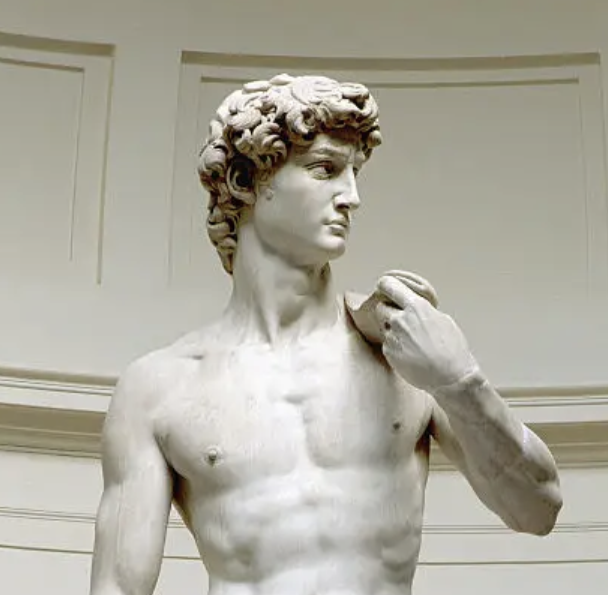
One of the most imposing marble statutes ever created is Michelangelo’s David. Out of a massive piece of stone that two other sculptors found too flawed to work with, the maestro created his masterwork. It is hard to imagine the creativity and skill required for such a project. There is no room for error in sculpting stone because there is no going back if a piece has been inadvertently chipped away. And so, Michelangelo first made a clay model that represented his vision for the completed work. The model then guided his artistry as he methodically chiseled away for three years until “David” was revealed. Afterwards, Michelangelo was reported to have said, “The sculpture is already complete within the marble block before I start my work. It is already there; I just have to chisel away the superfluous material.”
This is a powerful image for spiritual formation insomuch as we have a completed self, a true self that is hidden by superfluous material waiting to be chiseled away. The true self is that which was created in the image of God (Genesis 1:20), and which He crowned with glory and honor (Psalm 8:5). The superfluous material waiting to be removed is our sinful habits that has encrusted and encased our true self, and which has become the darker aspects of our character. We all have such material because we have all sinned and fallen short of the glory of God (Romans 2:23).
In some instances our sin is willful, but often it has developed from self-protective responses to the exigencies of life. Analogous to how an amorphous block of marble is formed from limestone when subject to intense heat and pressure, we humans have been formed by the pressures of life and the defenses we have created to protect ourselves. These defenses have developed mindlessly and have metastasized into various habits. They have become so automatic that we often are not even aware of how they stand in opposition to the teachings of Scripture. Indeed, we may have never made a connection between our spiritual life and patterns in our lives such as repeated arguments, anger at those with opposing views, critical judgments of others, or simply an inchoate unease about our lives. We may sense something is not right, but we can’t quite put our finger on it.
The longer we live mindlessly, allowing events to form our character, the thicker are the layers of sin obscuring what God desires for us. For example, in the current political environment tribalism is rampant with its concomitant critical judgments, anger, and name calling. It all seems perfectly normal because we see our aversion as being “righteous.” In this way we justify ourselves in ignoring Jesus’ most explicit teachings against such feelings and actions. It seems that many Christians are mindlessly swept along as if helpless before a tsunami of hatred. Overcoming entrenched anger is not easy, but if one truly believes that the commands of Jesus supersede cultural norms, it is possible. It must be possible!
The key for those who are looking for a better life and deeper walk with Jesus is to stop looking out, and start looking in. There is no security in what happens outside of us – we cannot protect ourselves from world events, actions of others, and suffering and loss because time and chance happens to all (Ecclesiastes 9:11). Looking inward we find a far more reliable sanctuary for our soul. For although outwardly we are wasting away, yet inwardly we are being renewed day by day (2 Corinthians 4:16). This journey inward involves removing those layers of sinful habits that cover our true self.
The process by which these layers are removed is known as spiritual formation. This has been a hot topic in many churches over the past several decades, although it has been alive and well throughout the past two millennia. We have a pretty good idea of what the true self looks like because, like Michaelangelo, we too have a model, which is Christ. The Apostle Paul describes the process as being “conformed to the image of His son.” (Romans 8:29). The question is how to do this?
Summary of Spiritual Practice
The answer is to practice the moral directives of Scripture, particularly those of Jesus and the Apostles. That’s it!
The practice of any one of these is known as a moral discipline. There are literally scores of directives in the Bible to choose from. Jesus tells us to love, forgive, not worry, and others. Many of the Apostles flesh these out in more detail. Paul defines “love” as patience, kindness, etc. He also writes about the fruit of the Spirit – love, joy peace, etc.
This approach is distinctly empirical and spiritual, as opposed to analytic and theological. In other words, learning and growth comes through intentional practice, rather than perfunctory assent to the commands. We are attempting to break sinful habits such as defensiveness, and to create righteous ones such as thankfulness. The practice requires us to engage our mind and to think deeply about what we are about. Traditional spiritual disciplines such as meditation and prayer are also essential. But literally the heart of the matter comes through practice. How else could it be?
This in no way negates the grace of God acting thorough the Holy Spirit to strengthen us in our quest to grow spiritually. However, this does not release us from following His commands to the best of our abilities. As Dallas Willard reminds us – grace is not opposed to effort, it is opposed to earning.
In brief, the practice is to attempt to follow a Biblical directive for some preselected period of time, perhaps a week or so. As much as possible we think about the directive throughout the day and attempt to embody it in everyday activities. Whenever encountering another person or situation we consider how to practice it during that moment. It may be helpful to journal experiences: successes, failures, or simply revelations.
Even following a single directive for one day can have an impact. I remember a piece from Cathine Marshall’s prayer journal entitled “A Fasting on Criticalness.” She describes how by fasting from critical thoughts and words for a single day, the extent of her critical nature was revealed and how it had crippled her creativity – in prayer, in relationships, and writing.
Following a single directive for a longer period can have a wider impact. Kathleen Singh writes, “One couple found that they tended to judge others in the casual conversations they had between themselves. They made a commitment to stop. They found that the adoption of just this one practice of abstaining from judging others allowed them entry into examining their behavior, and transforming their behavior, in the light of all of the other aspects of practicing moral discipline.”
Following multiple directives on a rotating basis can broaden the impact even more. Like turning a multifaceted diamond to see different aspects of the gem, multiple directives can be surprisingly revealing of our condition. This practice is to select several virtues to embody and/or vices to reject. Examples of virtues abound. The Apostle Paul mentions eight in the following: “clothe yourselves in compassion, kindness, humility, gentleness and patience. Bear with each other and forgive one another if any of you has a grievance against someone. Forgive as the Lord forgave you. And over all these virtues put on love, which binds them all together in perfect unity.” (Colossians 3:12-14) My personal practice for the past three years has been to rotate through the nine fruit of the Spirit (Galatians 5:22-23) – one a week and then repeat. Regarding vices to reject, Jesus mentions anger (in all its forms), worry, lust, and hypocrisy. Paul says we must put off anger, rage, malice, slander, filthy language, and lying (Ephesians 3:8-9) And 1 Corinthians 13:4-7 describes “love” in terms of both virtues to embrace and vices to reject.
The practice and goal are the same – practicing a way of life through focus and effort until that way becomes automatic. Although a single week is hardly enough time to change a lifetime habit, it is start. If nothing else, it can highlight areas of strength and weakness of character. It will also demonstrate the challenge of finding and staying on the narrow path. As well, if done within a group setting, there may be ancillary, though not less important benefits such as mutual support and sharing that can come as people become more open and vulnerable in discussing challenges, successes, and failures.
In addition to practicing the fruit of the Spirit for the past three years, here a few other Scriptural directives that I have practiced and found helpful. I include a few ideas with each one to stimulate your thoughts.
1) Complaining
“Do everything without grumbling or arguing.” (Philippians 2:14)
- This is an excellent “entry level” spiritual practice to start with.
- No one likes to live with someone who is always complaining about one thing or the other.
- For the next week don’t complain about anything – not the weather, traffic, a broken appliance, the neighbor’s dog, nothing! You get the idea.
2) Thankfulness
“Give thanks in all circumstances.” (1 Thessalonians 5:18)
- In many ways this is the flip side of not complaining.
- Make a list of things you are grateful for.
- Practice saying “thank you” to everyone who helps you or serves you.
3) Words
“Death and life are in the power of the tongue, and those who love it will eat its fruits.” (Proverbs 18:21)
- Consider your words and speak only when it is essential.
- Practice simply asking questions of others without agenda. In other words, be curious about their lives.
4) Death
“Someone who is always thinking about happiness is a fool. A wise person thinks about death.” (Proverbs 7:4)
- Meditate on your death.
- Imagine what, if anything, you would regret if you had just a few days left to live.
- Take a walk in a cemetery.
5) Presence
“My dear brothers and sisters, take note of this: Everyone should be quick to listen” (James 1:19)
- Practice listening to others without jumping in with your better ideas.
6) Worrying
“Therefore I tell you, do not worry about your life, what you will eat or drink; or about your body, what you will wear. Is not life more than food, and the body more than clothes?” (Matthew 6:25)
- Think about what you worried about a year ago, last week, yesterday – and how many you can recall.
- Meditate on the nature of worrying.
7) Patience
“Love is patient” (1 Corinthians 13:4)
- Pay attention to what situations make you impatient.
- Meditate on whether your impatience is rooted in pride.
- Practice controlling your words, bodily movements, and thoughts in all things.
8) Defensiveness
“If it is possible, as far as it depends on you, live at peace with everyone.” (Romans 12:18)
- Do not respond defensively when challenged or confronted.
- Do not hold a grudge.
- Forgive.
9) Thoughts
“Do not conform to the pattern of this world, but be transformed by the renewing of your mind. Then you will be able to test and approve what God’s will is – his good, pleasing and perfect will.” (Romans 12:2)
- Think about what you are thinking about this week.
- Meditate on the purpose of God’s will.
10) Judging
“Do not judge, or you too will be judged.” (Matthew 7:1)
- Fast from all criticism for a week.
There is no need to practice every moral discipline in Scripture because very quickly they merge into one another. For example, patience, peace, and gentleness are all connected; as are anger, defensiveness, and unforgiveness. Practicing one naturally leads to practicing the others. This is hardly surprising because all moral disciplines are designed to conform our hearts to God’s will – the twin stars of love and humility.
Biblical and Human Reasons for Obeying the Moral Directives of Scripture
The idea that we are obliged as Christians to live a certain kind of life is often looked upon skeptically by many in the church. There is a fear that focusing on obedience to moral directives is promoting “works righteousness,” which goes against the assurance that we are saved by faith. At the risk of heresy, I believe there are at many reasons to be skeptical of such skepticism. For salvation notwithstanding, the reasons for obedience stand more or less on their own. Nonetheless, for those who find heresy lurking in this, I will simply say that I am grateful they no longer burn heretics at the stake, but only get angry with them and call them fools.
1) Number of Moral Directives – over and over, we are commanded to live a certain kind of life – a life permeated by love and humility. Consider the following:
- “Do not merely listen to the word, and so deceive yourselves. Do what it says.” (James 1:22)
- “Whoever claims to love God yet hates a brother or sister is a liar. For whoever does not love their brother and sister, whom they have seen, cannot love God, whom they have not seen.” (1 John 4:20)
- “If you love me, keep my commands.” (John 14:15)
- “Whoever wants to be my disciple must deny themselves and take up their cross daily and follow me. For whoever wants to save their life will lose it, but whoever loses their life for me will save it.” (Luke 9:23-24)
- “Do nothing out of selfish ambition or vain conceit. Rather, in humility value others above yourselves.” (Philippians 2:3)
Perhaps one of the most succinct directives is found in the Old Testament.
- “He has shown you, O mortal, what is good. And what does the Lord require of you? To act justly and to love mercy and to walk humbly with your God.” (Micah 6:8)
2) Richer Life – the moral directives of Scripture help us to live a richer life today. Jesus says,
- “I have come that they may have life, and have it to the full.” (John 10:10); and
- “Everyone who hears these words of mine and puts them into practice is like a wise man who built his house on the rock.” (Matthew 7:24)
This is life today! More than half of the words of Jesus recorded in Matthew relate to virtue and the life we live here on earth. Although there are no guarantees, we still find throughout the Bible promises of a better life when we live according to God’s word. For example:
- “God holds success in store for the upright, he is a shield to those whose walk is blameless” (Proverbs 2:7).
3) Mystery – we need always to be mindful of the core tenet of Protestant theology, namely, “grace alone, thorough faith alone, in Christ alone.” But we also need to be open to the mystery of the complete Biblical story. As Peter Scazzero writes in “Emotionally Healthy Spirituality,” “Job’s friends had no room for the ‘confusing in-between,’ no room for mystery. Like many Christians today they overestimated their grasp of truth.” The history of the Evangelical church includes disagreements and splits over theology, personalities, and morality, with everyone believing that are on the “high road.” These differences are not unimportant but surely we must see that the only way we are connected is by humbly accepting the mystery inherent in different points of view – including the relationship of faith and meritorious living.
4) Choices – Ironically, we Christians get to choose to obey or ignore God’s word just like Adam and Eve in the Garden of Eden. God gave a very precise command –
- “Do not eat from the tree of the knowledge of good and evil.” (Genesis 2:17)
In disobeying God’s command, they paid a very dear price. There was nothing inherently wrong with eating from tree except that God forbade it. And from this one act, a foundational tenet of our faith – original sin – was born. And yet, like Adam and Eve, we often feel that we can ignore God’s commands with impunity.
5) Our Heart – consistency between our hearts and actions – is the most important thing to God. We are warned against evil in our hearts.
- “Woe to you, teachers of the law and Pharisees, you hypocrites! You clean the outside of the cup and dish, but inside they are full of greed and self-indulgence.” (Matthew 23:25)
- “These people honor me with their lips, but their hearts are far from me. They worship me in vain; their teachings are merely human rules.” (Matthew 15:8-9)
- “The Lord does not look at the things people look at. People look at the outward appearance, but the Lord looks at the heart.” (1 Samuel 16:7)
Breaking old habits and creating new ones in line with Biblical directives so that we automatically act out of what is in our heart is the essence of spiritual formation.
6) Everyday Life – from a strictly human perspective, who would you rather live next door to – a Christian who is angry, mean spirited and belligerent, or an agnostic who is friendly, loving and peaceful? Should not our aim as Christians be to act like the latter and not the former? Again, not as a matter of salvation, but as a matter of our common humanity.
7) Bookends of Jesus’ Teaching – the first and last words of Jesus’ ministry recorded in Matthew speak to obeying His commands.
- The first: “Repent, for the kingdom of heaven has come near.” (Matthew 4:17)
“Repent” means to turn from what God forbids and to what He commands.
- The last: “Go and make disciples of all nations, baptizing them in the name of the Father and of the Son and of the Holy Spirit, and teaching them to obey everything I have commanded you.” (Matthew 28:19-20)
Nothing could be clearer – the directive of the Great Commission is to make disciples by teaching obedience to Jesus’ commands.
8) Witness – Finally, our greatest witness for Jesus is not what we say about our faith but about how we live it out. Or in the words of Jesus – the quality of our love for one another.
- “By this everyone will know that you are my disciples, if you love one another.” (John 13:35)
Endnote
I entitled this final post “Living Grace,” which can be read in two different ways.
“Living” can be a verb indicating that it is something that we are to do, something that we are to live out. Read this way, the question we ask is whether we are living out the grace of God’s commands in our life or ignoring them?
“Living” can also be an adjective, indicating that the grace of God that enables our formation is living as opposed to dead. Read this way, the question we ask is whether grace in our life is alive or dead?
S
 Pursuit Of Virtue